






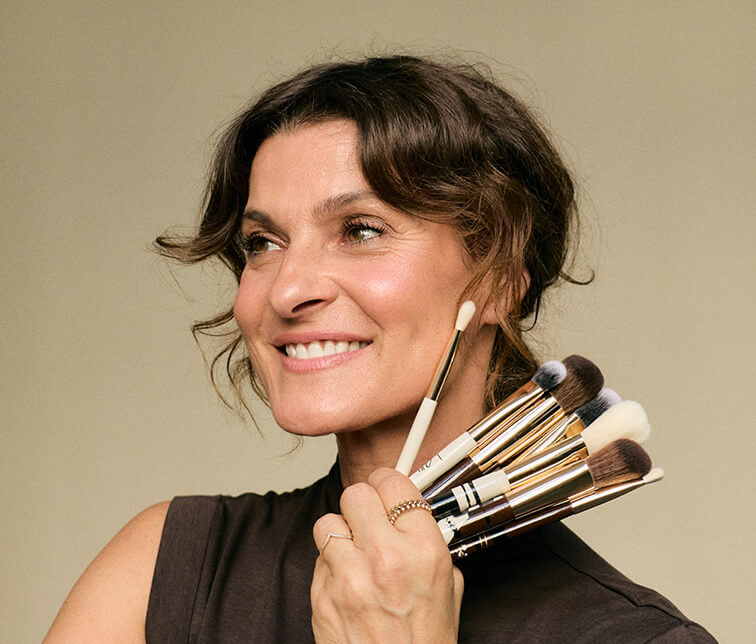
The Artist Collection by Marlene Lufen
Marlene Lufen loves fine craftsmanship. Whether at home, at work, or when applying Make-up. She has now designed her own Brushes for JACKS: hand-painted in her favorite shade, chocolate brown.
Read more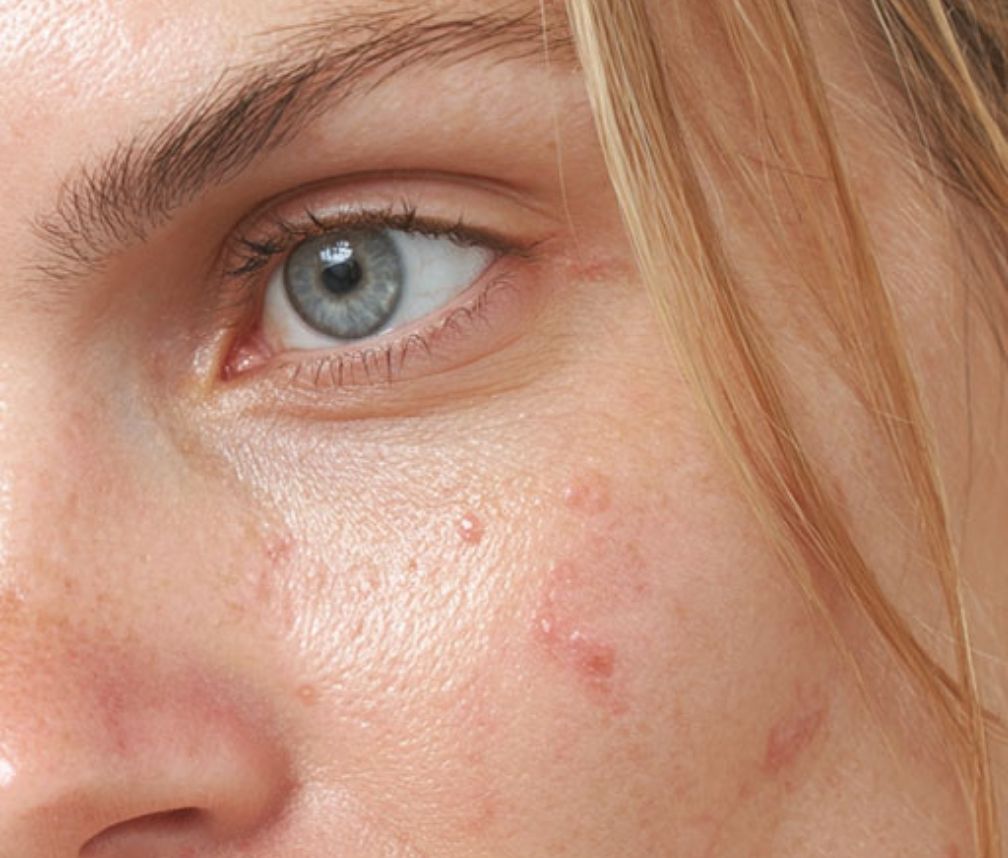
Reading time approx. 5-6 minutes
Impure skin can be incredibly distressing. When the skin is out of balance, you quickly feel uncomfortable in your own face – we know that all too well! But impurities, especially acne, are not a sign of poor care, but a sign that your skin needs support. With the right routine, acne can be significantly improved. In this article, you will learn how acne develops, which ingredients really help, and what you should pay attention to in your daily facial care.
by Julia Döll – 28. October 2025
Acne is an inflammatory skin condition that occurs when sebaceous glands are overly active and pores become clogged. This allows bacteria on the skin to multiply, which in turn leads to pimples, blackheads, and underlying blemishes. The face, back, and décolleté are especially commonly affected.
In addition to genetic predisposition, hormonal changes, an unbalanced diet, or excessive stress usually play a role – or a combination of all! But overly rich or comedogenic skincare products can also worsen acne. That’s why choosing the right products is crucial – it helps to stabilize the skin’s condition in the long term.
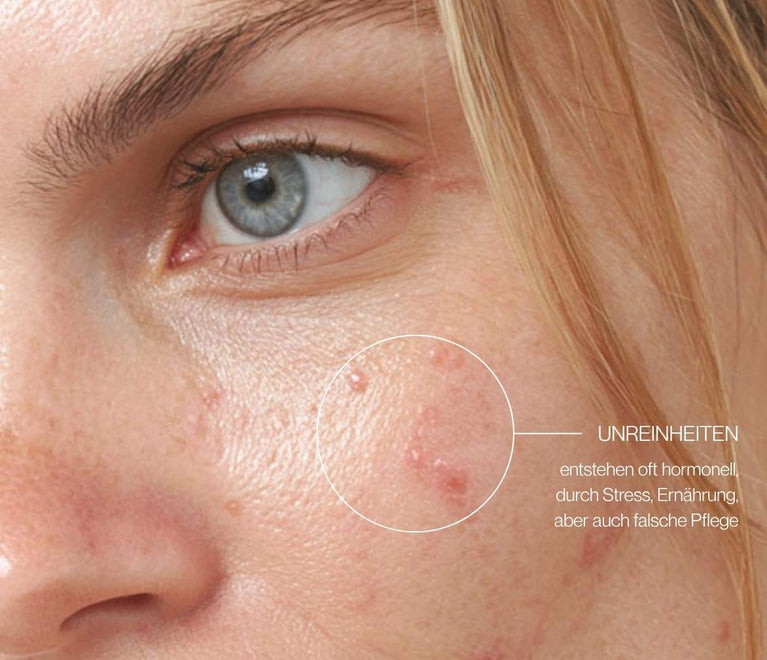

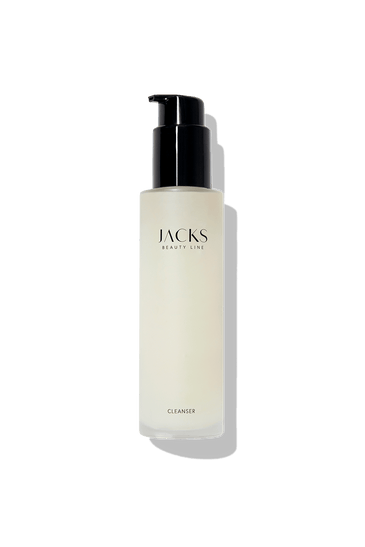
Gentle but thorough cleansing is really the be-all and end-all for acne. It’s best to use mild formulations without alcohol that remove excess sebum without drying out the skin. This way, the skin barrier remains intact and the inflammation in the skin can subside.
Since the skin is already damaged with acne and may even have actual wounds depending on the severity, you should always avoid mechanical peels. These physically abrade the skin surface with their grainy particles or brushes – which further irritates the skin. Instead, opt for chemical peels – these rely on biochemical exfoliation. The bonds between dead skin cells are dissolved, making it easier for them to detach from the skin surface and be removed.
This fact is often underestimated: Even oily or impure skin needs moisture! Because dehydrated skin can occur with all skin types and is always a sign that the skin's water balance is too low. If your skin is oily but still regularly feels tight, it makes sense to use light, non-comedogenic formulations that help maintain the skin's natural balance and prevent these feelings of tightness.
Super important – even though the first impulse to keep any overly rich cream away from the face is naturally understandable. But UV radiation can worsen existing inflammations and additionally leave pigment spots. A light, mattifying sunscreen protects the skin – without weighing it down.
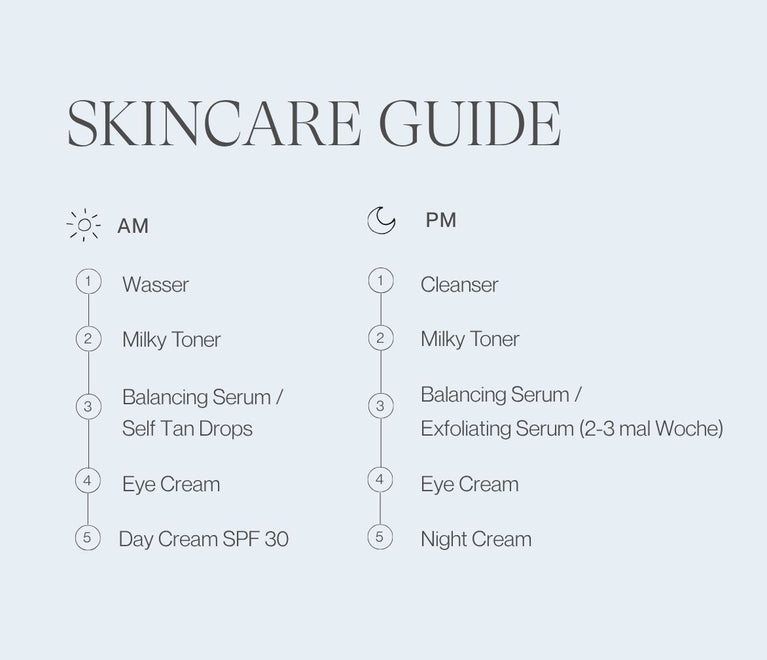
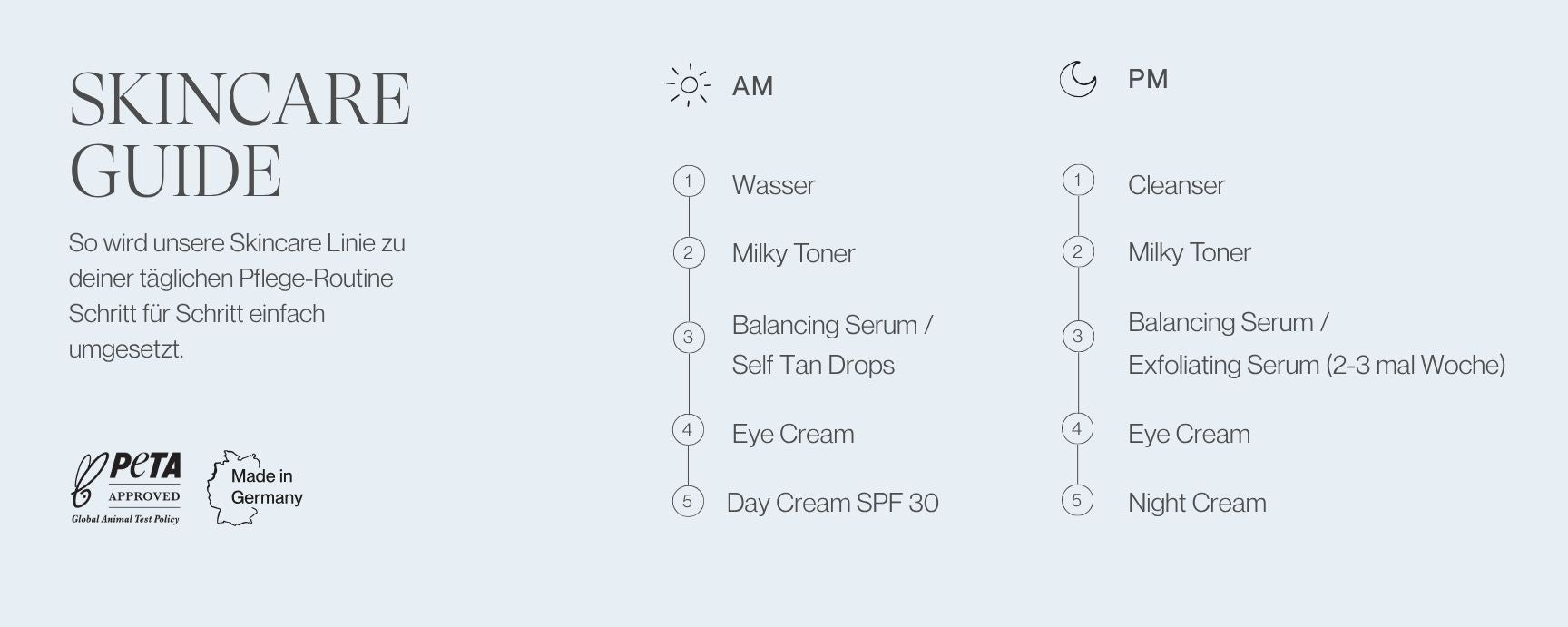
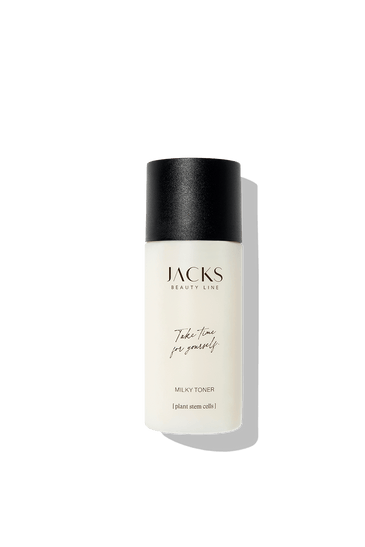
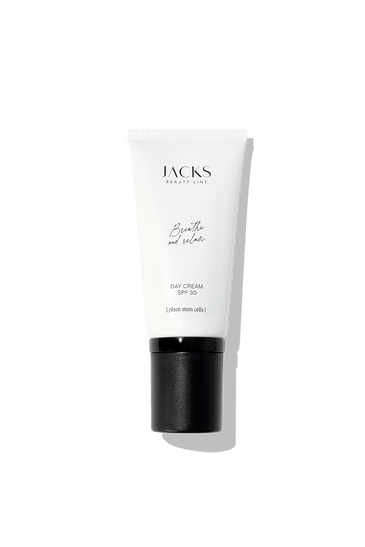
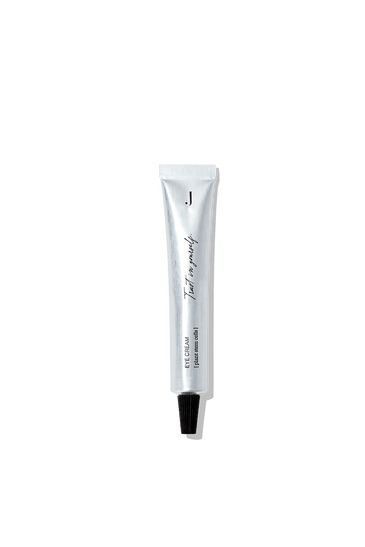
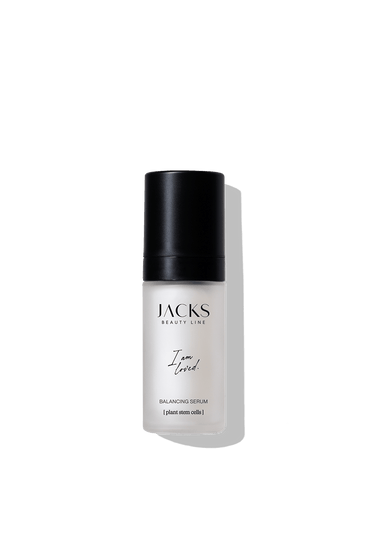
In the morning, a gentle cleansing helps to remove sweat and sebum from the night. Afterwards, we recommend our Milky Toner, which optimally prepares the skin for further care and provides moisture. Then apply a balancing serum and a refreshing eye cream, and as the final step in the morning, use a suitable day care with SPF, such as our Day Cream.
In the evening, the cleansing can be a bit more thorough – after all, the goal here is to properly remove dirt, Make-up, and sunscreen. Following that, the Milky Toner, the Balancing Serum, and our Eye Cream provide perfect support for the skin. Afterwards, active ingredients like retinal or salicylic acid further support regeneration – ideally in a soothing, moisturizing care product.
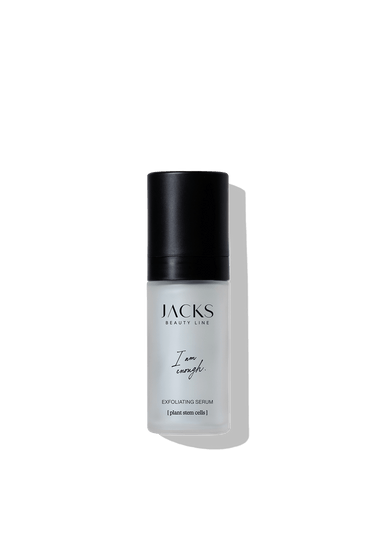
2-3 times a week, we recommend using a gentle chemical peel – with our skincare line, this is easy to do by replacing the Balancing Serum with the Exfoliating Serum on those days.
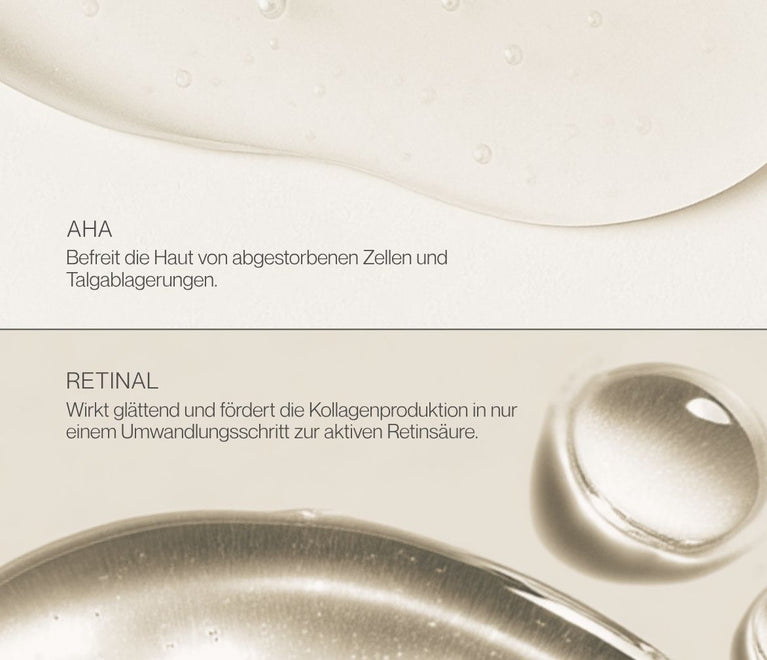
Promotes cell renewal, dissolves keratinization, and prevents clogged pores – ideal for a more even skin texture. Even more effective is retinal – also a vitamin A derivative, which requires only one conversion step and therefore not only works faster but is also gentler on stressed skin.
Glycolic acid (AHA) works on the skin's surface, while salicylic acid (BHA) penetrates deep into the pores. Together, they free the skin from dead cells and sebum deposits.
The classic for acne: works antibacterial, anti-inflammatory, and clears the pores.
Reduces redness, strengthens the skin barrier, and regulates sebum production – perfect for sensitive, blemish-prone skin.
Has anti-inflammatory effects and supports wound healing. A real all-round talent for acne and other skin impurities!

Too aggressive cleansing or too many active ingredients at the same time can worsen the skin's appearance. Instead, rely on a few coordinated products – less is more. Squeezing pimples often leads to inflammation and scars – not always easy, but you should really try to leave blemishes alone!
Acne requires patience and the right care – but it can be brought under control. With a consistent routine, gentle products, and targeted active ingredients, you can visibly improve your skin's appearance and stabilize it in the long term. However: In general, it is always advisable to have skin conditions like acne examined by a doctor.
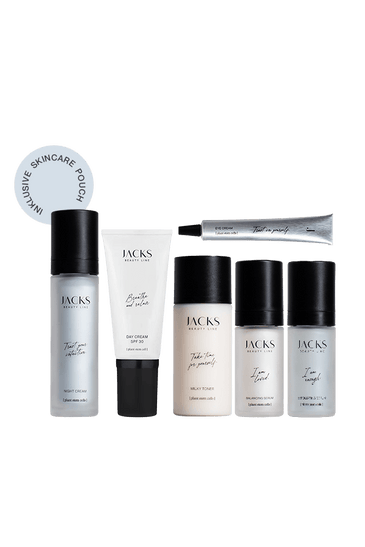
To get started with gentle and active ingredient-based care, we recommend the Clear Skin Set from our skincare line. It was developed to regulate impurities and support skin balance.
Light, non-comedogenic formulations with ingredients like niacinamide, zinc, or retinal are ideal. Our Day Cream SPF 30 is suitable for acne-prone skin.
Initial improvements often appear after just four to six weeks, but later progress can also be completely normal. The important thing is to be consistent and not to change products too frequently.
Absolutely! The key is to choose products that harmonize well with your skin and do not burden it further. Our recommendation: light, breathable formulations that contain nourishing ingredients and apply gently – just like our Glow Foundation, which covers imperfections while promoting a healthy complexion.
It is only important that you thoroughly remove your Make-up in the evening so your skin can regenerate overnight.
Marlene Lufen loves fine craftsmanship. Whether at home, at work, or when applying Make-up. She has now designed her own Brushes for JACKS: hand-painted in her favorite shade, chocolate brown.
Read more
Look makeup-free even though you’re wearing Make-up: Here’s how to achieve the no-makeup look step by step.
Read more
Why did the new shade expansion take two years? Rim Zemuye explains how foundation, concealer, and Cream Blush for darker skin tones came about.
Read more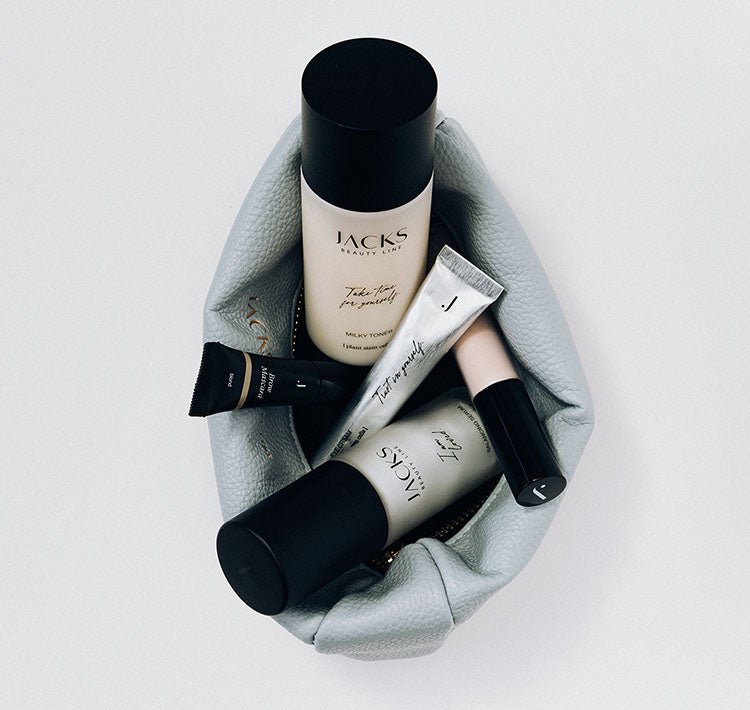
Ordered the wrong shade, and now the product sits unused in your bathroom? It doesn’t have to be that way: our consultation options before and after your purchase help you...
Read more
Sun, heat, humidity: In summer, your Make-up needs lightweight textures. Find out how to keep your look fresh even at 30 degrees.
Read more
UV rays, heat, and sweat put particular stress on your skin in summer. Here’s how to build the right skincare routine.
Read more
Cream Blush is creamy with a glowy finish, Powder Blush is powdery and long-lasting. Find out which blush suits your skin type and why combining both often delivers the best...
Read more
Discover how to apply mascara correctly! With step-by-step instructions, tips on color, ingredients & removing makeup, you can achieve the perfect eye look without clumping or smudging.
Read more