






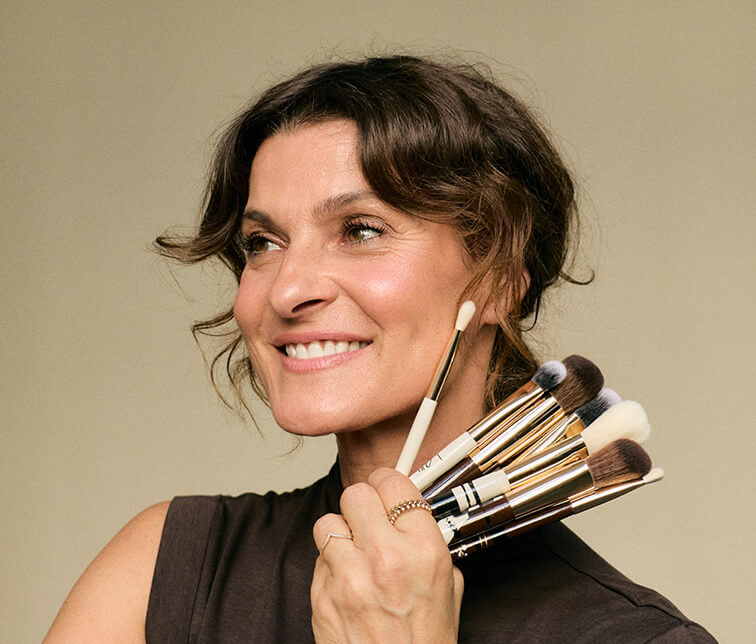
The Artist Collection by Marlene Lufen
Marlene Lufen loves fine craftsmanship. Whether at home, at work, or when applying Make-up. She has now designed her own Brushes for JACKS: hand-painted in her favorite shade, chocolate brown.
Read more
Reading time approx. 8-10 minutes
Pigmentation spots usually develop over many years – and their care also requires time and patience. Whether after a summer with a lot of sun, hormonal changes, or as a result of inflammation: hyperpigmentation can be really stubborn. The good news? With the right facial care for pigmentation spots, you can visibly lighten dark spots and effectively prevent new spots. You can find out how this works here.
by Julia Döll – 30. October 2025
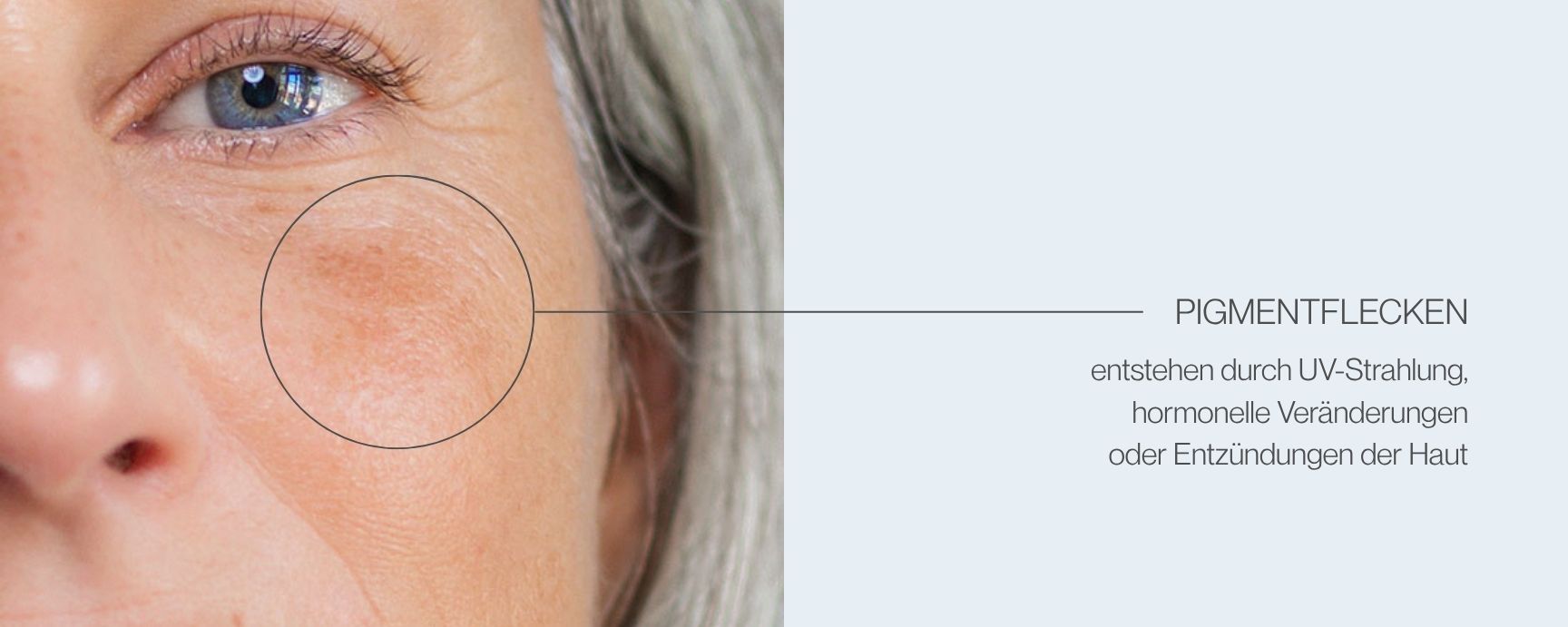
When the skin produces more melanin, the body's natural pigment, visible discolorations can appear on the skin. These are called pigment spots or hyperpigmentation and can have various causes. The most common types include:
If you're wondering now whether freckles are also a kind of pigmentation spots, you're absolutely right. Both belong to hyperpigmentation, and if you will, freckles are small pigmentation spots. However, these are genetically determined and already appear in children, whereas pigmentation spots or age spots usually only appear over time and after many years of UV exposure. Additionally, freckles are generally more pronounced in summer than in winter, while untreated pigmentation spots tend to remain relatively constant.
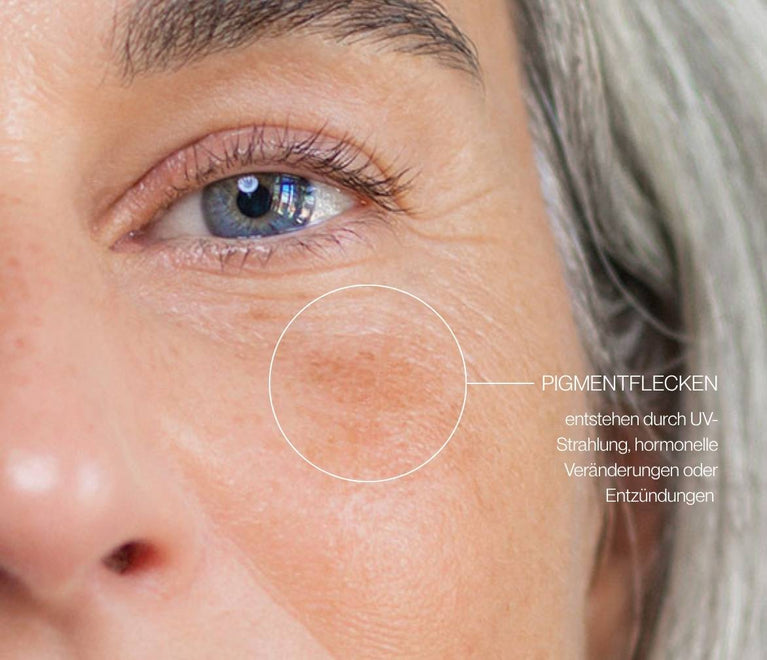
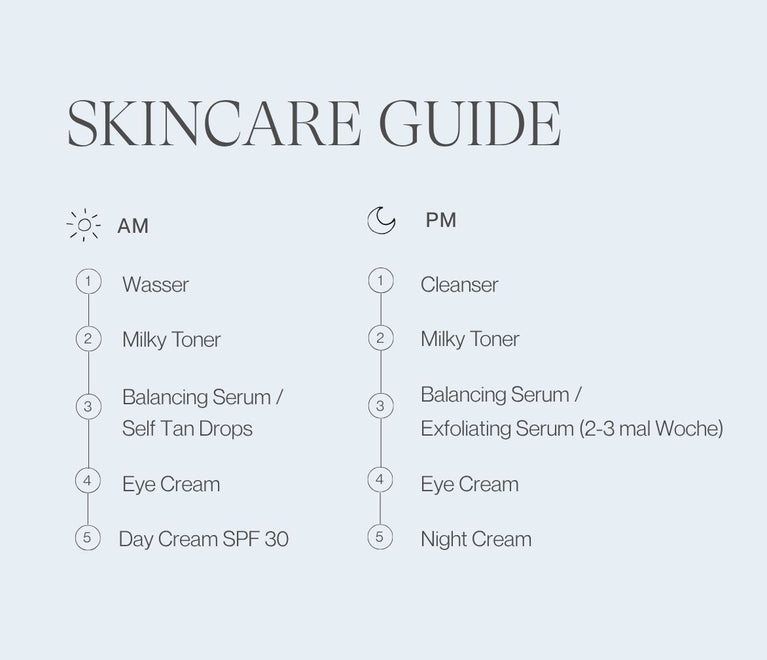
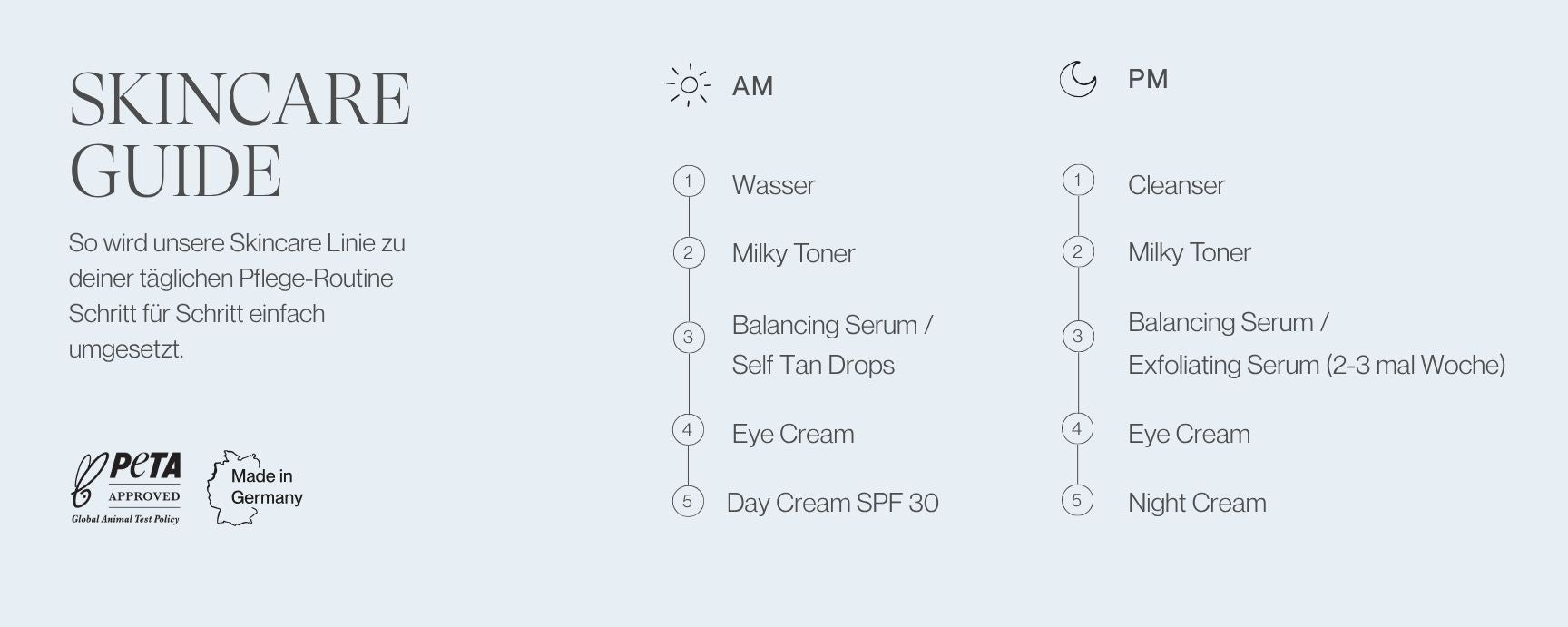
An effective skincare routine combines protection, regeneration, and active ingredients that specifically target the so-called melanin process.
In the morning, the focus is on prevention: gentle cleansing, active ingredients like niacinamide or vitamin C that even out skin tone, and very importantly: consistent sun protection.
In the evening, the care focuses on corrective and regenerative effects. Gentle chemical peels promote cell renewal and gradually fade dark spots. Active ingredients like retinal or plant stem cells, which we use throughout our entire skincare line, further support the skin’s regeneration.
But most importantly: stick with it! Pigmentation spots rarely fade overnight. But with a tailored routine, visible results can definitely be achieved—for a more even, radiant complexion.
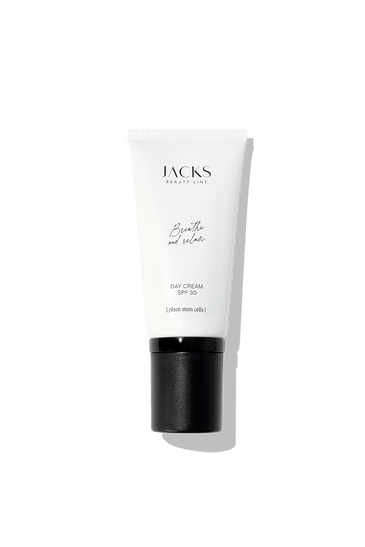
UV radiation is one of the main triggers for pigmentation spots, and not only in summer, but also in bad weather and even through window glass! Without sufficient sun protection, existing spots can become darker and new ones can form. So if you want to prevent or reduce hyperpigmentation, daily SPF is essential.
But hormonal changes, skin irritations, or an insufficiently regenerated skin barrier can also stimulate melanin production. Gentle, barrier-strengthening care helps to stabilize the skin and reduce inflammation – and this, in turn, is an important foundation for reducing pigmentation.
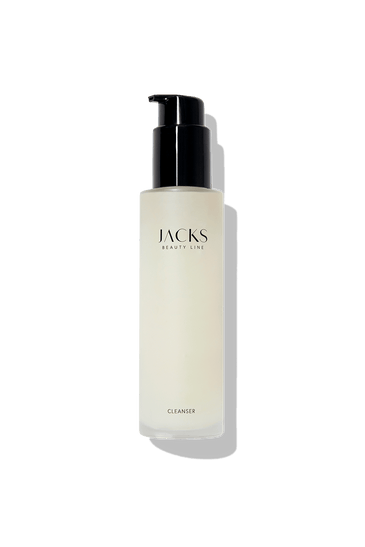
Aggressive cleansers and also coarse, mechanical scrubs can irritate the skin and worsen pigmentation spots. Milder, moisturizing formulations that remove Make-up and sebum without drying out the skin are better. For gentle facial cleansing, our Cleanser is suitable.
In the entire skincare routine, it makes sense to focus on ingredients that specifically target melanin production while simultaneously strengthening the skin barrier. A combination of antioxidants, gentle exfoliants, and barrier protection promotes cell renewal, can sustainably reduce spots, and generally makes the skin appear more even.
And to ensure that these active ingredients can work throughout the entire day, always remember: don't forget sunscreen afterwards!
Some active ingredients to look out for when choosing the right skincare:
When choosing the right skincare products for pigmentation spots, it’s not just about the active ingredients – it’s also about how they are absorbed into the skin. Light, fast-absorbing formulations like serums or fluids are ideal because they can be easily layered and don’t weigh down the skin. This also applies to Make-up for pigmentation spots, as there are a few things to consider here as well. We even have a Masterclass available from JACKS beauty line founder Miriam Jacks.
For active ingredients like Vitamin C or Retinol and Retinal, it is important that they are formulated in stable, high-quality products so they can fully develop their effects. The balance between effective concentration and good tolerance, even for sensitive skin, is always very important.
Those prone to dry skin can additionally use a moisturizing cream with hyaluronic acid, squalane, or glycerin – this keeps the skin supple and less sensitive.
Basically, it’s best to use fewer, but carefully coordinated products – this brings the best long-term results.
Treating pigmentation spots takes time, but with the right routine, their appearance can be significantly improved. The key is active ingredients that specifically target hyperpigmentation, combined with daily UV protection and a stable skin barrier. And perhaps the most important thing of all? Consistently sticking to this skincare routine!
Marlene Lufen loves fine craftsmanship. Whether at home, at work, or when applying Make-up. She has now designed her own Brushes for JACKS: hand-painted in her favorite shade, chocolate brown.
Read more
Look makeup-free even though you’re wearing Make-up: Here’s how to achieve the no-makeup look step by step.
Read more
Why did the new shade expansion take two years? Rim Zemuye explains how foundation, concealer, and Cream Blush for darker skin tones came about.
Read more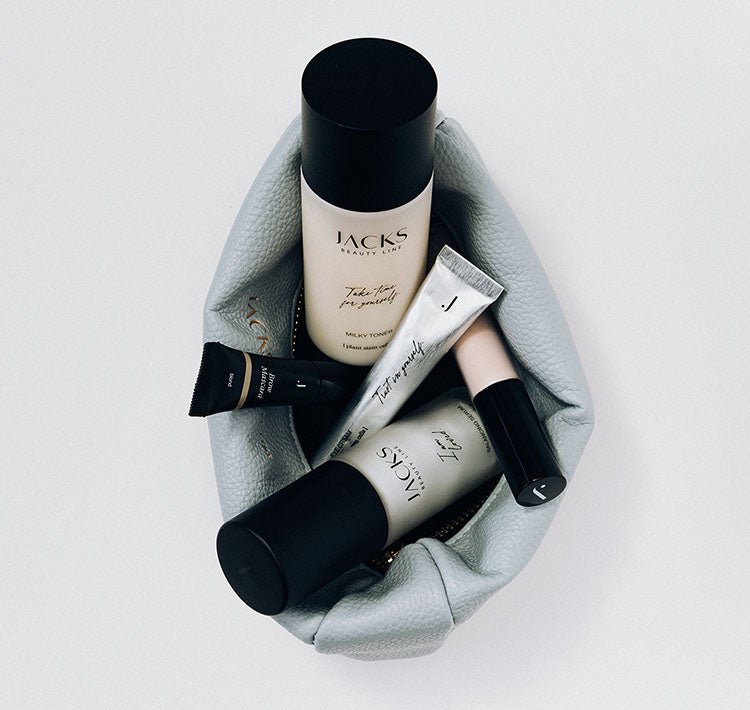
Ordered the wrong shade, and now the product sits unused in your bathroom? It doesn’t have to be that way: our consultation options before and after your purchase help you...
Read more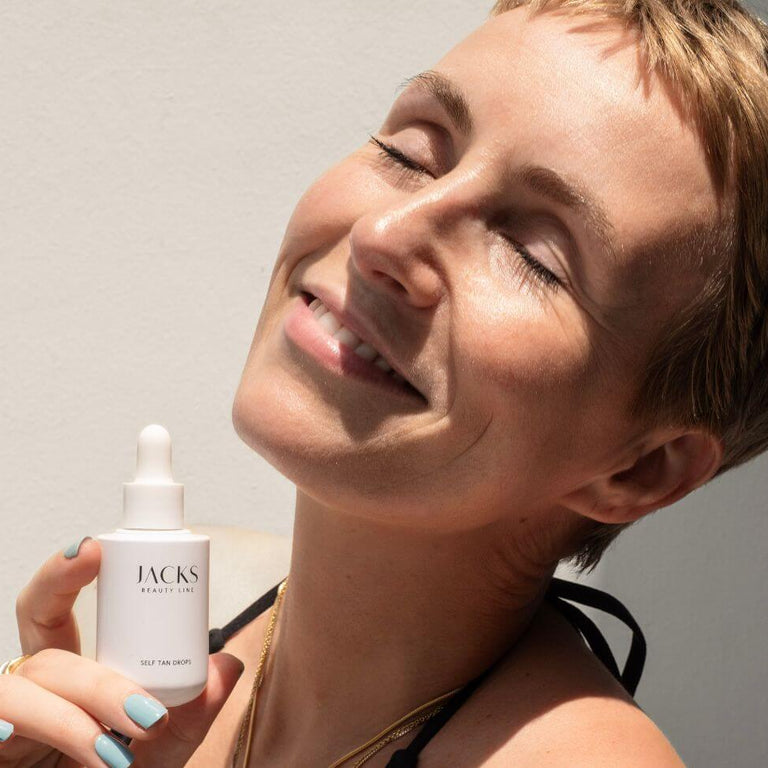
Sun, heat, humidity: In summer, your Make-up needs lightweight textures. Find out how to keep your look fresh even at 30 degrees.
Read more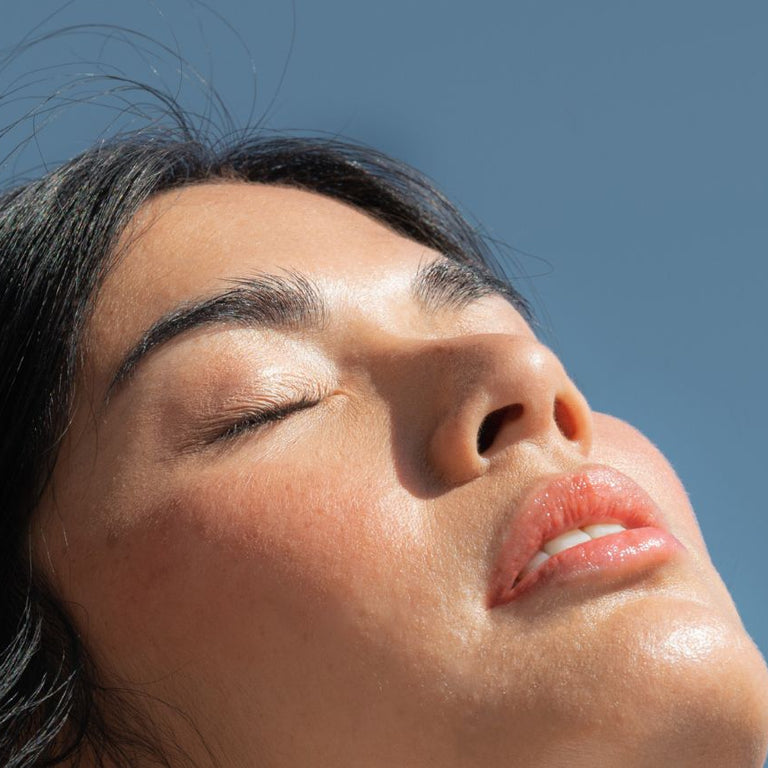
UV rays, heat, and sweat put particular stress on your skin in summer. Here’s how to build the right skincare routine.
Read more
Cream Blush is creamy with a glowy finish, Powder Blush is powdery and long-lasting. Find out which blush suits your skin type and why combining both often delivers the best...
Read more
Discover how to apply mascara correctly! With step-by-step instructions, tips on color, ingredients & removing makeup, you can achieve the perfect eye look without clumping or smudging.
Read more