







The Artist Collection by Marlene Lufen
Marlene Lufen loves fine craftsmanship. Whether at home, at work, or when applying Make-up. She has now designed her own Brushes for JACKS: hand-painted in her favorite shade, chocolate brown.
Read more

Reading time approx. 6-8 minutes
Sensitive skin reacts more quickly to external influences, often precisely when care is supposed to help. Redness, burning, or feelings of tightness are part of everyday life for many. That’s why a facial care routine that doesn’t overwhelm the skin but specifically protects, strengthens, and soothes it is all the more important. In this article, we show you how to recognize sensitive skin, why the skin barrier plays a central role, and what a care routine that truly benefits your skin looks like.
by Julia Döll – last updated on 17. February 2026
Sensitive or delicate skin is not a fixed skin type but rather a skin condition. This means that any skin can be temporarily sensitive, regardless of whether it is actually dry, normal, or rather blemished. It then reacts more quickly and intensely to external stimuli, which can especially show up on the face as an unpleasant skin sensation. There are many reasons for this, some of which can be better influenced and unfortunately often worse. Often, it is not a single specific reason but a combination of several factors, such as:
Sensitive skin can of course show visible signs like redness, flakiness, or dry patches. But not every sensitive skin immediately looks “noticeable.” Burning, tingling, itching, or a persistent feeling of tightness often comes first.
The skin barrier is our natural shield. It is located in the outermost layer of the skin and ensures that moisture stays inside the skin while irritants stay out. A healthy skin barrier consists of skin cells and lipids (fats) that hold them together. When this system is intact, the skin feels balanced and resilient. When the barrier is damaged, it loses moisture much faster and becomes more permeable to irritants. This, in turn, makes it more sensitive.
Reasons for this include:
Sensitive skin especially benefits from care that specifically protects the skin barrier and combines active ingredients sensibly instead of overloading it.
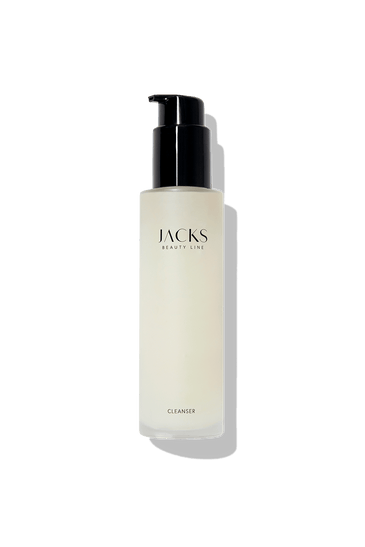
Gentle cleansing is the foundation of any skincare routine. Sensitive skin should be thoroughly but as gently as possible cleansed. Ideal are:
After cleansing, the skin should feel clean and comfortable, not tight or "squeaky."
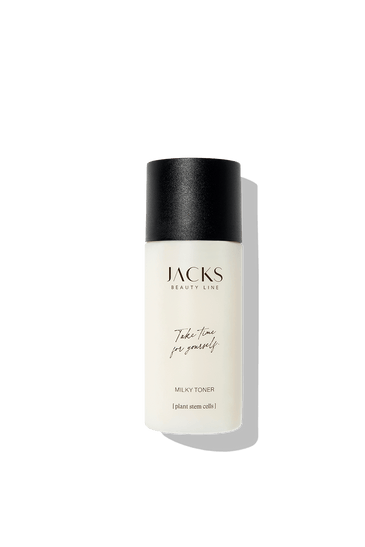
Moisture is essential, even for sensitive or blemished skin. Proven active ingredients that soothe and at the same time support the skin barrier include, for example:
The rule is: better to use a few well-tolerated ingredients than many highly concentrated active ingredients at once. Especially for sensitive skin, less is often more.
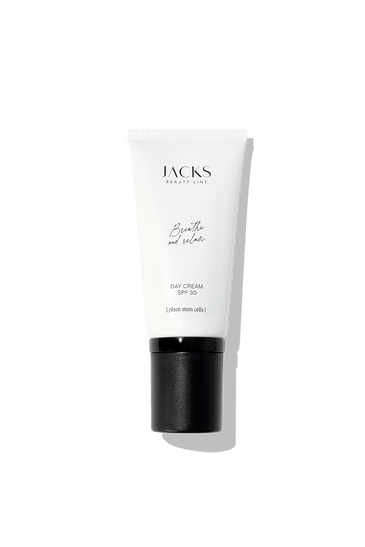
Sensitive skin needs daily protection – especially from UV radiation. There is no single "right" filter: both mineral and modern chemical UV filters can be suitable for sensitive skin.
Besides UV radiation, external factors such as cold, wind, environmental influences, or heat are also major stressors for sensitive skin. A protective daily care product also helps stabilize the skin barrier and prevent irritation.
In the morning, the focus for sensitive skin should be on protection and moisture.
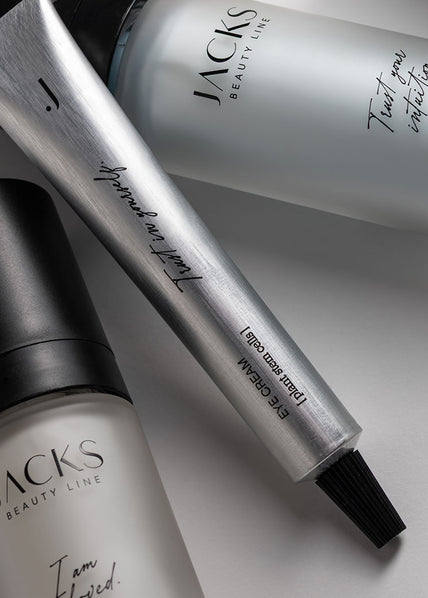
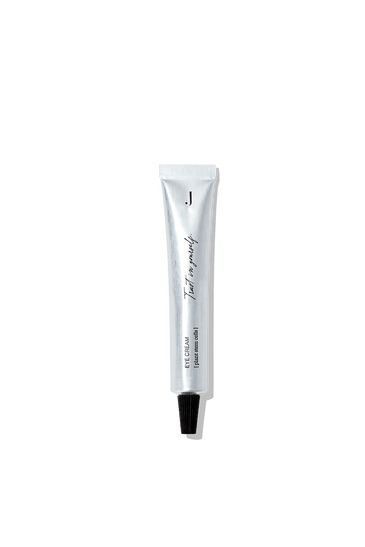
In the evening, on regeneration and soothing. It is therefore especially sensible to use active ingredients in the night care that support the skin barrier, and special attention should also be paid to the eye area for sensitive skin. The skin here is much thinner and can react more easily to intensive active ingredients or perfumes.
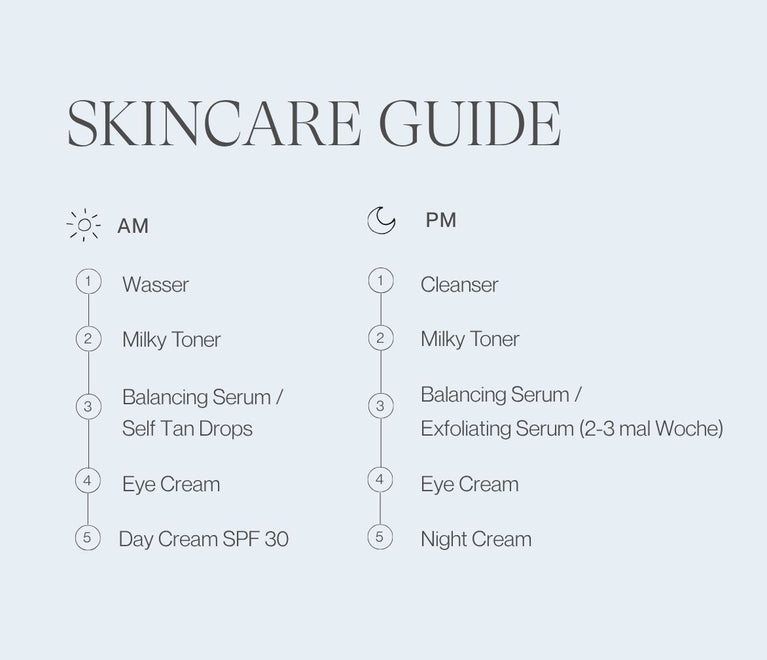
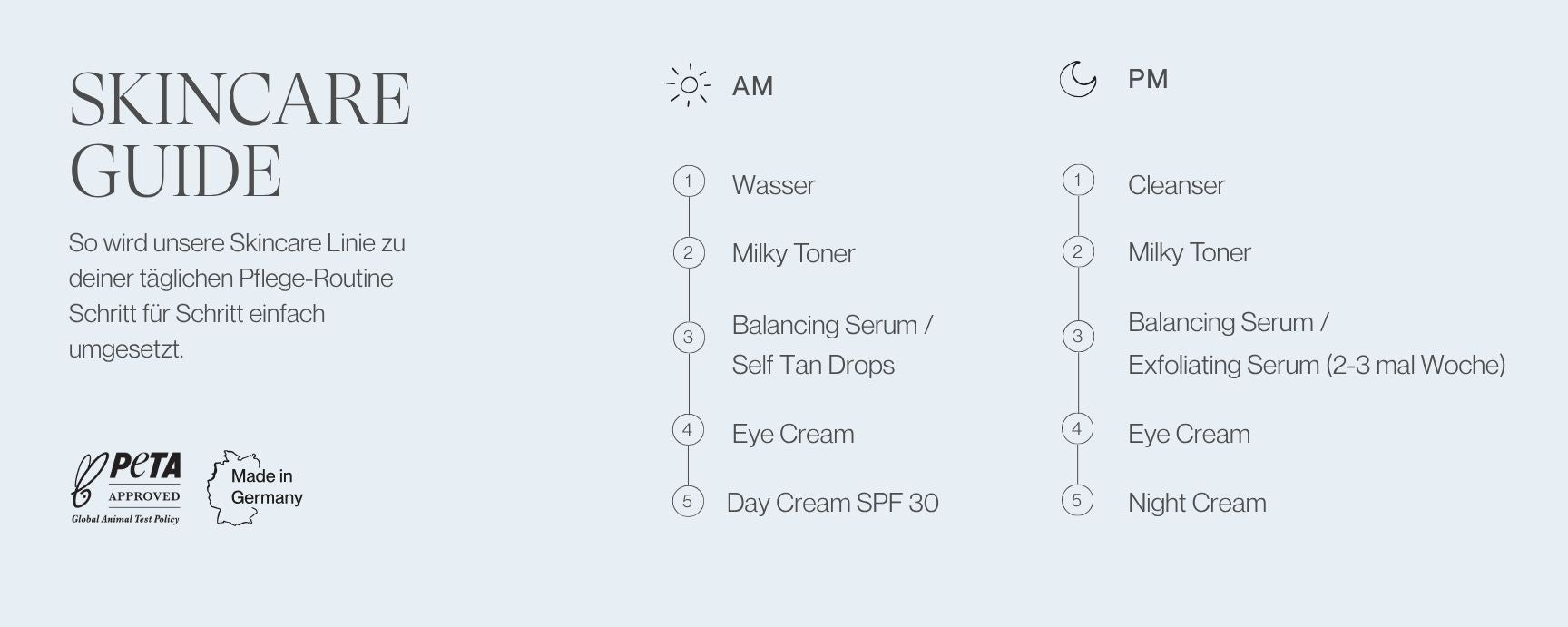
Well tolerated for sensitive skin are, for example:
Sensitive skin often reacts to:
Skincare doesn’t end in the bathroom. Sleep, nutrition, and stress levels also affect how balanced your skin feels. Chronic stress or lack of sleep can promote inflammatory processes and make the skin more sensitive.
You can read more about this in our article Healthy Skin from Within.
Over the course of the year, the needs of sensitive skin change. While in summer skincare UV rays, heat, and often dry air mainly stress the skin, the switch between cold outdoor air and dry indoor heating air in winter is anything but easy for sensitive skin. Because it produces less oil in winter, which can promote dry, sensitive areas, a rich winter facial care is essential. Of course, still with sun protection!
With chronic inflammatory skin conditions such as rosacea or couperose, special care and restraint are required. UV radiation, heat, and irritating ingredients can worsen the symptoms. A skincare routine that is as gentle as possible and consistent sun protection are especially important here. What you should pay attention to in skincare for rosacea is explained in the related article.
More is not always better! This generally applies, but especially for sensitive skin. Common mistakes that can even worsen skin reactions include:
Well-intentioned measures can often add stress to the skin. It is usually much better to rely on a simplified, well-thought-out skincare routine and stick to it consistently.
Sensitive skin is a skin condition that can affect any skin type from time to time. It reacts more quickly to external stimuli and often shows itself through redness, tightness, burning, or itching.
Central to the well-being of sensitive skin is an intact skin barrier. It protects the skin from moisture loss and irritants, while a weakened barrier increases sensitivity.
A skincare routine for sensitive skin should therefore be gentle, targeted, and clearly structured:
Trying new things can be great, but should always be introduced gradually. This way, you create the best foundation for balanced skin feeling and long-term skin health.

Marlene Lufen loves fine craftsmanship. Whether at home, at work, or when applying Make-up. She has now designed her own Brushes for JACKS: hand-painted in her favorite shade, chocolate brown.
Read more
Look makeup-free even though you’re wearing Make-up: Here’s how to achieve the no-makeup look step by step.
Read more
Why did the new shade expansion take two years? Rim Zemuye explains how foundation, concealer, and Cream Blush for darker skin tones came about.
Read more
Ordered the wrong shade, and now the product sits unused in your bathroom? It doesn’t have to be that way: our consultation options before and after your purchase help you...
Read more
Sun, heat, humidity: In summer, your Make-up needs lightweight textures. Find out how to keep your look fresh even at 30 degrees.
Read more
UV rays, heat, and sweat put particular stress on your skin in summer. Here’s how to build the right skincare routine.
Read more
Cream Blush is creamy with a glowy finish, Powder Blush is powdery and long-lasting. Find out which blush suits your skin type and why combining both often delivers the best...
Read more
Discover how to apply mascara correctly! With step-by-step instructions, tips on color, ingredients & removing makeup, you can achieve the perfect eye look without clumping or smudging.
Read more