






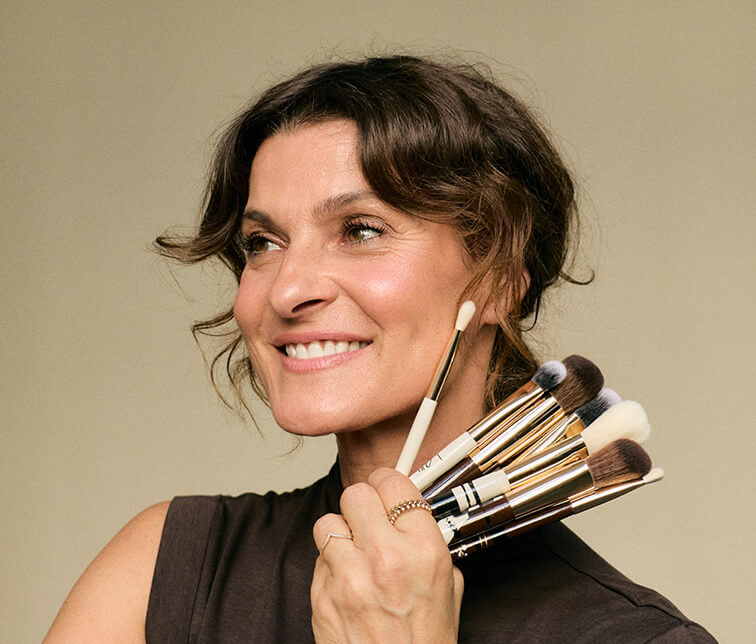
The Artist Collection by Marlene Lufen
Marlene Lufen loves fine craftsmanship. Whether at home, at work, or when applying Make-up. She has now designed her own Brushes for JACKS: hand-painted in her favorite shade, chocolate brown.
Read more
Reading time approx. 7-8 minutes
Retinol is a skincare classic that most people know. But retinal? That is its stronger, gentler relative, and it is still mentioned far too rarely. Both active ingredients belong to the vitamin A derivatives that slow down skin aging, boost cell regeneration, and ensure an even skin tone. The crucial difference lies in how quickly and efficiently they work in the skin, and that is exactly what makes all the difference in practice. In this article, we explain what distinguishes the two active ingredients from each other and which one suits your skin.
by Julia Döll – last updated on 19. March 2026
Retinoids are the umbrella term for all vitamin A derivatives, meaning all active ingredients structurally related to vitamin A. These include retinol, retinal, and retinoic acid, among others. They all share the same goal: to stimulate the skin's cell renewal, build collagen, and improve the skin's appearance.
What differentiates them is the way they achieve this. For a retinoid to be effective, it must first be converted into retinoic acid in the body, which is the actual active form. The more conversion steps an active ingredient requires, the slower and weaker its effect, but it is usually also gentler on the skin.
In skincare, retinoids are mainly used in the anti-aging sector: they reduce wrinkles, smooth pigmentation spots, refine the skin texture, and can also be effective against blemishes and acne.
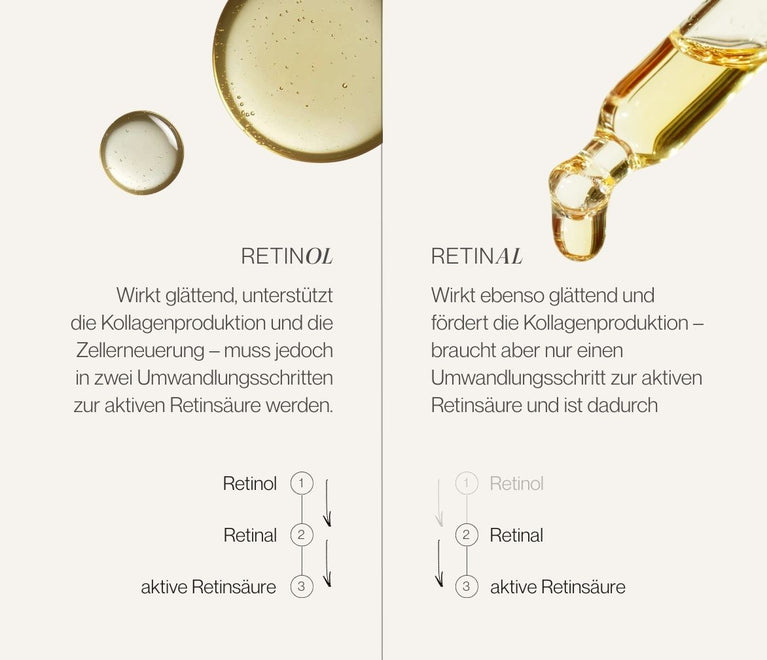
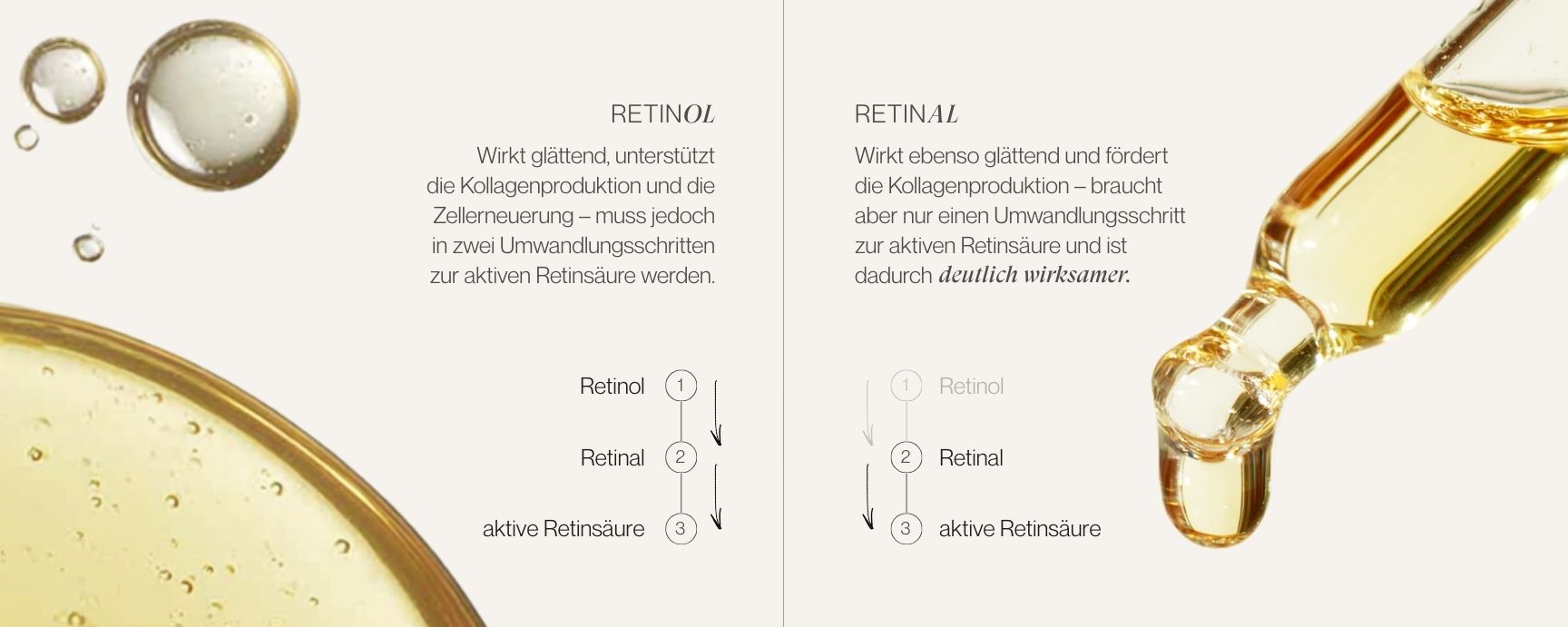
Retinol is the best-known retinoid in cosmetics and has been a staple ingredient in many anti-aging products for decades. As a vitamin A derivative, it promotes cell regeneration, smooths fine lines, and improves skin texture. The catch: for retinol to become active, it must first be converted in the skin in two steps—first into retinal and then further into retinoic acid.
Retinal, also called retinaldehyde, is the direct precursor to retinoic acid and thus only one step away from the active form. This makes retinal significantly faster acting than retinol, which requires two more conversion steps. At the same time, retinal is released more evenly in the skin, which improves tolerance.
Both active ingredients supply the skin with vitamin A and thus work effectively against skin aging, impurities, and a dull complexion. Both are effective, but the key difference lies in the speed, potency, and tolerability.
Retinal requires only a single conversion step to active retinoic acid, is up to eleven times more effective than retinol, and also offers a more stable formulation and better tolerance. This makes it especially suitable for experienced users and mature skin.
Retinol, on the other hand, requires two conversion steps and therefore works more slowly but more gently. As the most proven and best-researched ingredient in the retinoid spectrum, it is the ideal starting point for beginners and sensitive skin.
You should slowly introduce both active ingredients into your routine, starting with a low concentration to allow your skin to get used to them. They are applied in the evening because retinoids are light-sensitive. Be sure not to forget sunscreen in the morning!
Retinol: often 0.1 to 1%, beginners start at 0.1%
Retinal: usually 0.05 to 0.1%, since it is stronger, a lower concentration is sufficient
Retinal works well with:
Retinal should not be combined with the following ingredients:
Vitamin A during pregnancy is a topic you should take seriously. High-dose retinoids like isotretinoin or tretinoin are proven to be harmful to the fetus and are absolutely forbidden during pregnancy. For topically applied products such as creams and serums, the data is less clear: although it is not conclusively proven that the active ingredients enter the bloodstream in significant amounts through the skin, experts and the Federal Institute for Drugs and Medical Devices recommend as a precaution to avoid retinol and retinal during pregnancy and breastfeeding.
Our advice: Discuss the use with your gynecologist and switch to compatible alternatives during this time.
Alternatives to retinol and retinal include niacinamide, hyaluronic acid, vitamin C, bakuchiol, or peptides. These ingredients reliably care for and smooth the skin without vitamin A.
Retinal convinces us for the same reasons shown in this article: it works faster than retinol, is better tolerated, and is effective at a lower concentration. For a skincare line that wants to combine visible results with skin health, this is the logical choice.
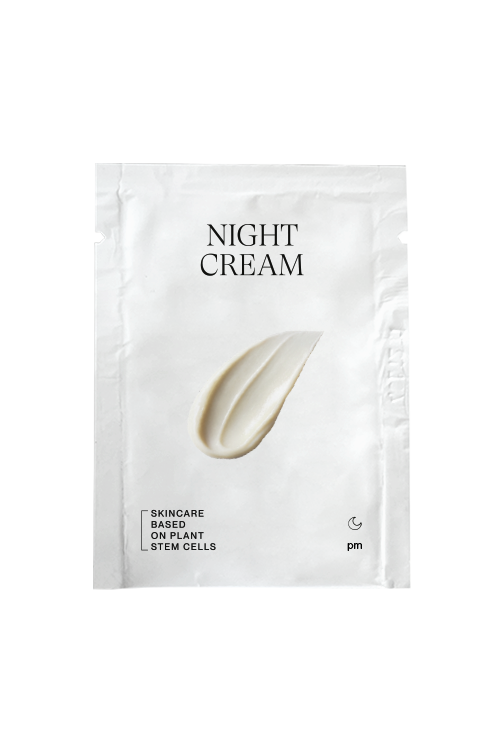
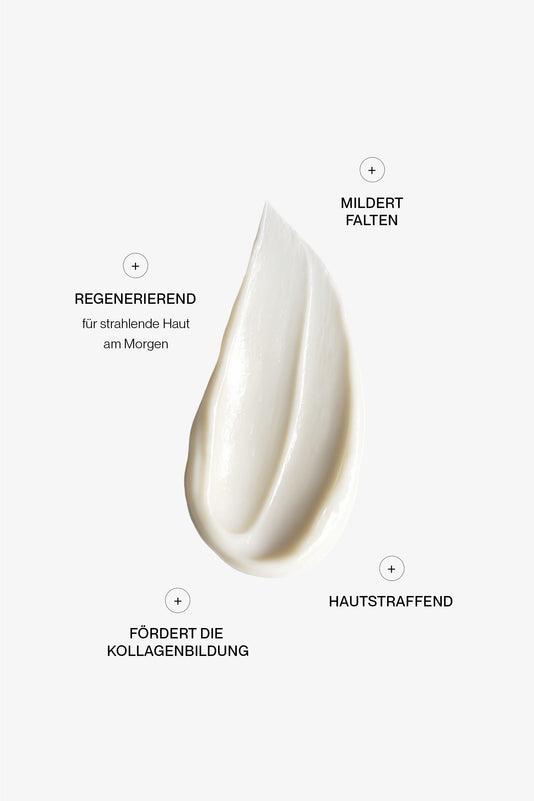
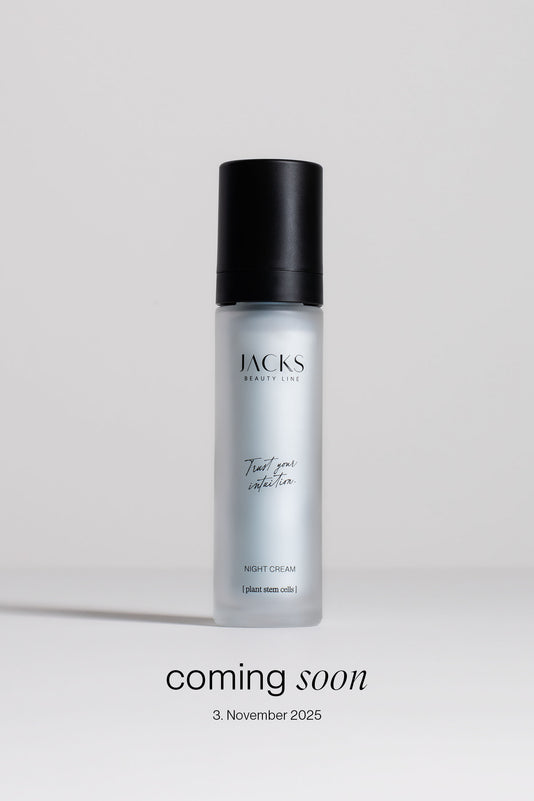
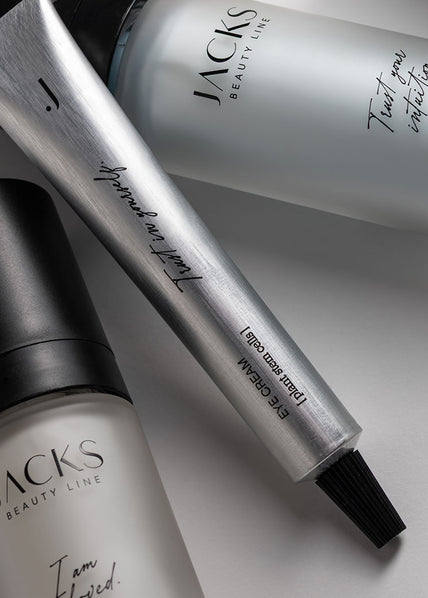
That’s why we use retinal instead of classic retinol in our Night Cream, combined with hyaluronic acid, niacinamide, and plant stem cells for a formula that actively regenerates the skin overnight without stressing it.
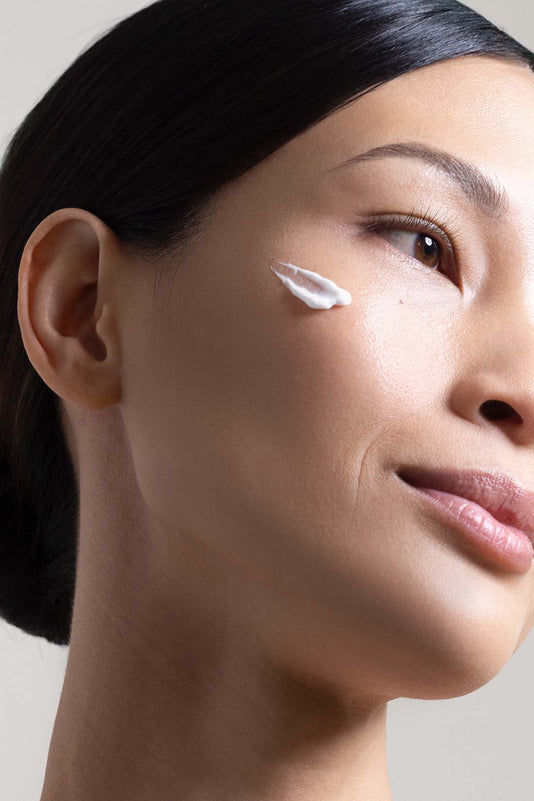
See for yourself how retinal feels in practice:


Both active ingredients belong to the retinoid family and work against skin aging, pigmentation spots, and impurities. The key difference lies in the path to the active form: Retinol requires two conversion steps, while Retinal only needs one, making it faster acting and at the same time more tolerable.
The main points summarized:
Retinal is stronger. It requires only one conversion step to active retinoic acid, while retinol requires two. Studies show that retinal can be up to eleven times more effective than retinol, while also being better tolerated.
No. Since both active ingredients belong to the same group, one of them is sufficient. Using both at the same time unnecessarily increases the risk of irritation.
With retinal often after just four to six weeks, with retinol rather after eight to twelve weeks. For sustainable results, regular use over several months is important.
Yes, with a low concentration (from 0.1%) and slow acclimatization. Those who find retinol too irritating can switch to retinal, which, despite its higher effectiveness, is often better tolerated.
Yes. The effects on cell renewal and collagen production build up over months and diminish if the application is permanently stopped. A break in the summer is possible because retinoids increase light sensitivity.
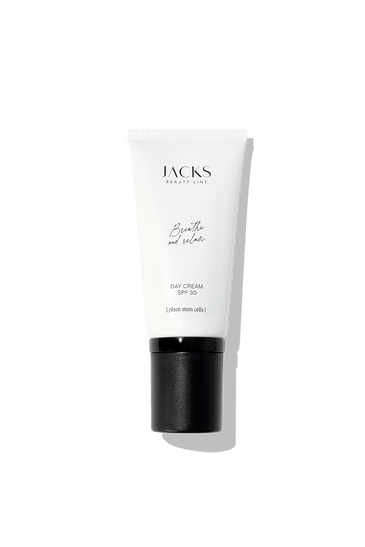
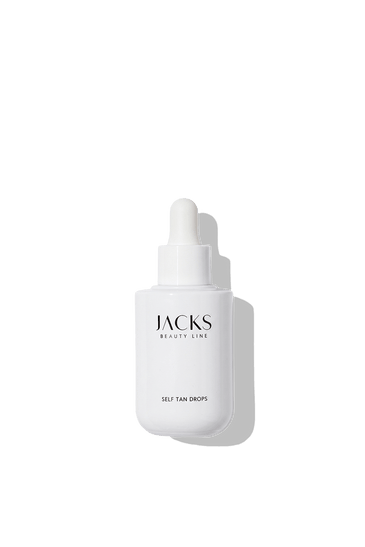
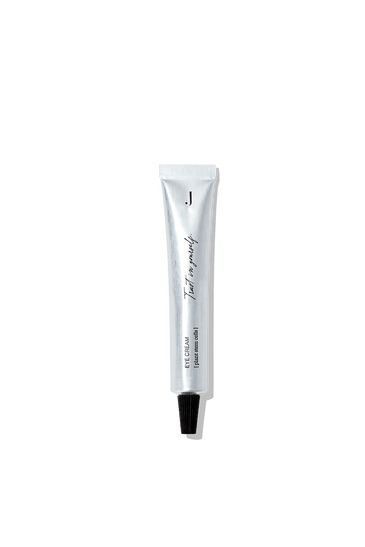
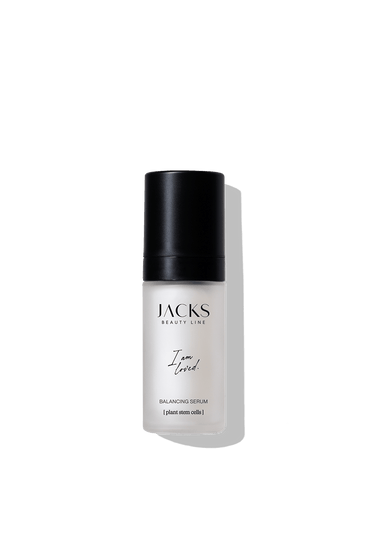
Discover our skincare
Marlene Lufen loves fine craftsmanship. Whether at home, at work, or when applying Make-up. She has now designed her own Brushes for JACKS: hand-painted in her favorite shade, chocolate brown.
Read more
Look makeup-free even though you’re wearing Make-up: Here’s how to achieve the no-makeup look step by step.
Read more
Why did the new shade expansion take two years? Rim Zemuye explains how foundation, concealer, and Cream Blush for darker skin tones came about.
Read more
Ordered the wrong shade, and now the product sits unused in your bathroom? It doesn’t have to be that way: our consultation options before and after your purchase help you...
Read more
Sun, heat, humidity: In summer, your Make-up needs lightweight textures. Find out how to keep your look fresh even at 30 degrees.
Read more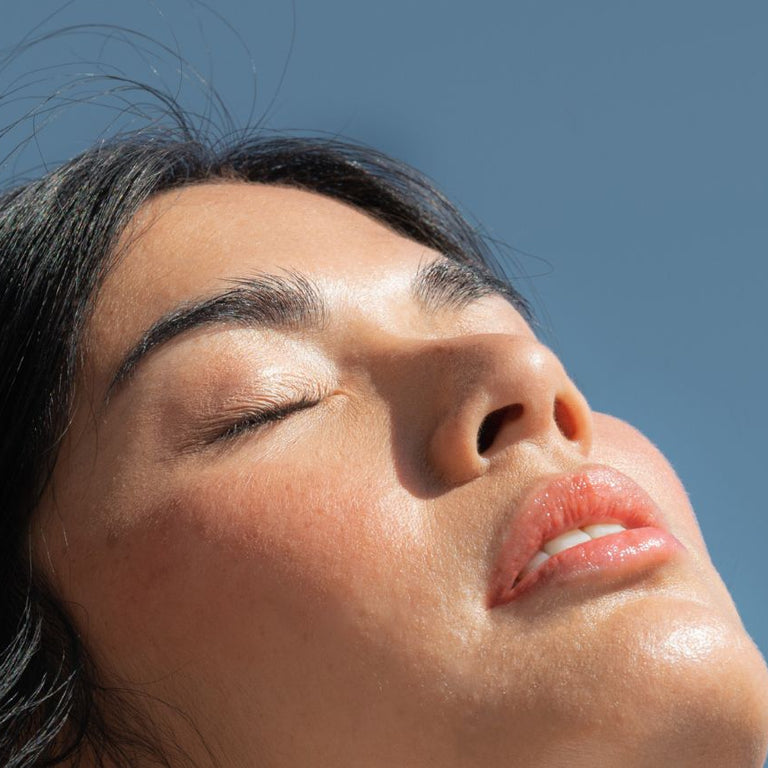
UV rays, heat, and sweat put particular stress on your skin in summer. Here’s how to build the right skincare routine.
Read more
Cream Blush is creamy with a glowy finish, Powder Blush is powdery and long-lasting. Find out which blush suits your skin type and why combining both often delivers the best...
Read more
Discover how to apply mascara correctly! With step-by-step instructions, tips on color, ingredients & removing makeup, you can achieve the perfect eye look without clumping or smudging.
Read more