





The Artist Collection by Marlene Lufen
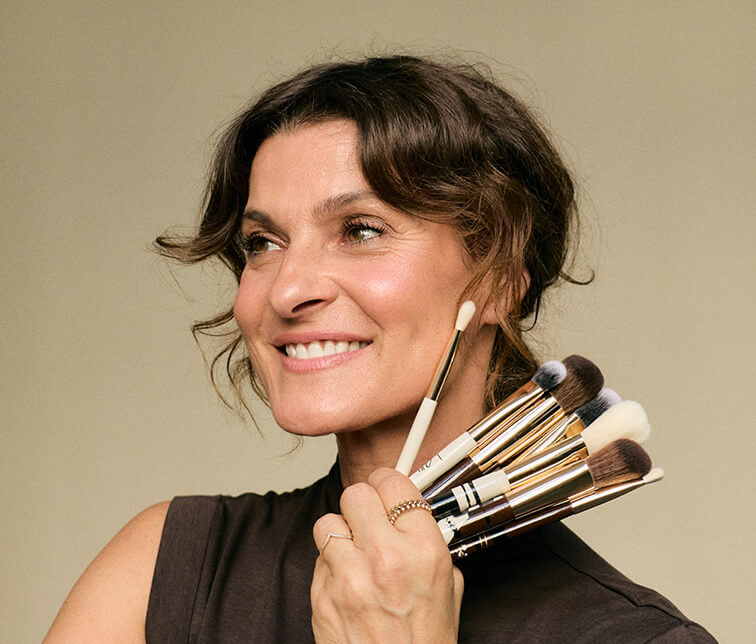
Marlene Lufen loves fine craftsmanship. Whether at home, at work, or when applying Make-up. She has now designed her own Brushes for JACKS: hand-painted in her favorite shade, chocolate brown.
Read more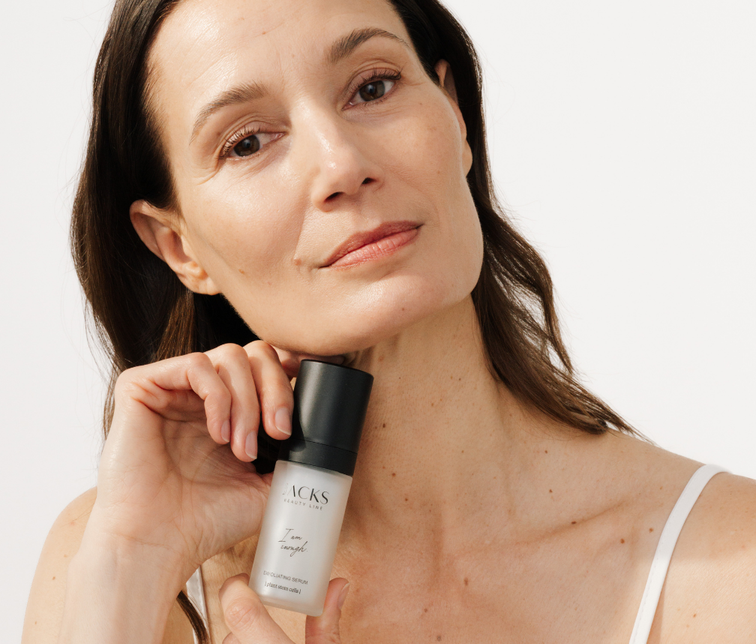
Reading time approx. 6-7 minutes
Peels are among the most effective methods to refine the skin's appearance, remove dead skin cells, and prepare the skin for the absorption of active ingredients. Chemical and mechanical peels differ fundamentally in their mode of action, compatibility, and the skin types they are suitable for. In this article, we explain which peel is better suited for your skin and what you should pay attention to when using them.
by Julia Döll – last updated on 24. April 2026
The skin continuously renews itself: every 28 to 40 days, new cells migrate to the surface and replace dead ones. As we age, this process slows down, dead skin cells accumulate, and the complexion appears duller and more uneven. Daily cleansing removes dirt, Make-up, and excess sebum but does not remove dead cells from the skin’s surface.
That is exactly what exfoliations do. Through targeted exfoliation, they promote cell renewal, refine skin texture, and create a fresher, more even complexion. Another effect: active ingredients from serums and creams can penetrate deeper into the skin after exfoliation and thus work more effectively.
Regular exfoliation smooths skin texture, reduces impurities and clogged pores, improves pigmentation spots, and increases the absorption of active ingredients from subsequent skincare products.
Important: An exfoliation does not replace cleansing but complements it as a separate step in the Skincare Routine.
A chemical peel uses acids or enzymes to chemically dissolve the bond between dead skin cells, without any friction or mechanical abrasion. The active ingredients penetrate the upper layers of the skin, allowing for an even, controlled exfoliation.
Which acid is right depends mainly on the skin type and the desired effect.
Advantages:
Disadvantages:
A mechanical scrub removes dead skin cells through the physical abrasion of visible abrasive particles. The effect is usually immediately noticeable and visible.
Typical ingredients:
The intensity depends directly on the grain size: the finer the particles, the gentler the exfoliation. Mechanical scrubs are especially suitable for skin types seeking an immediate and noticeable effect.
Advantages:
Disadvantages:
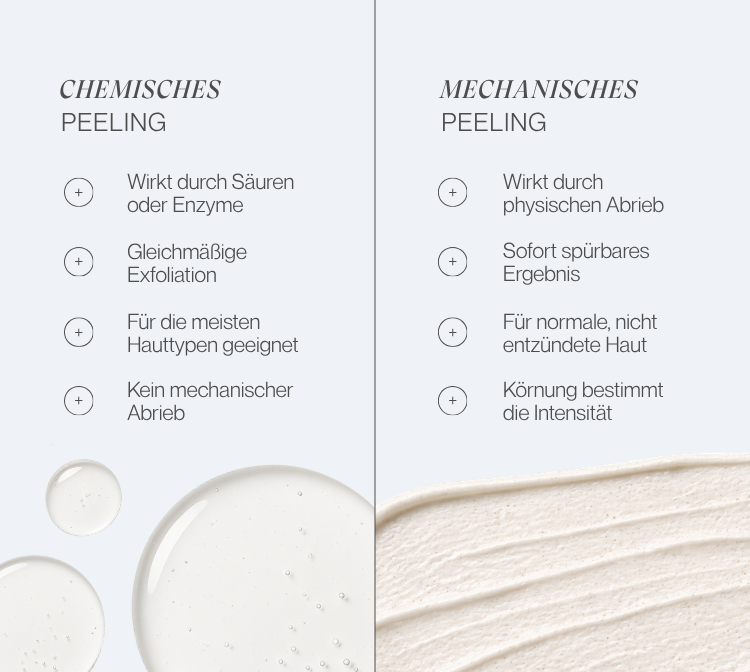
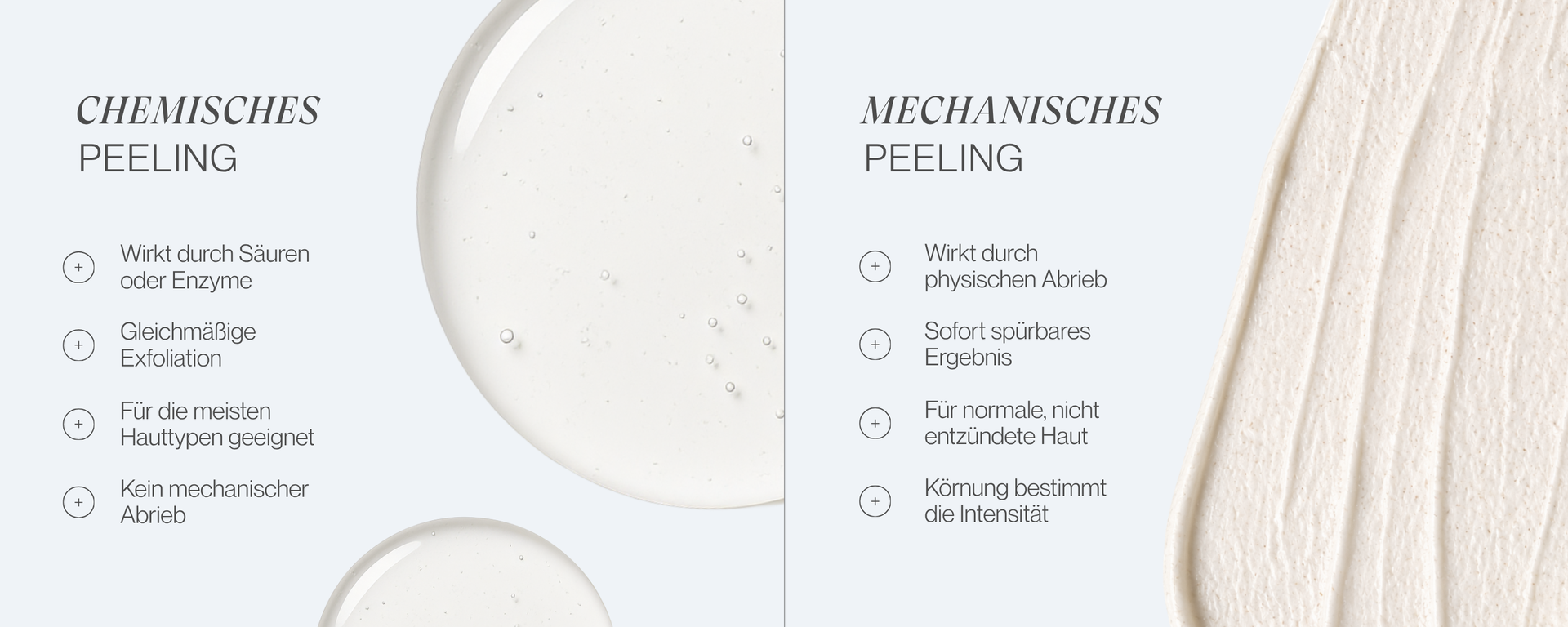
The choice between chemical and mechanical peeling mainly depends on your skin type and skin sensitivity. If your skin is not sensitive, occasional mechanical peels are generally fine. However, we generally recommend chemical peels because they work effectively regardless of skin type without overly stressing the skin.
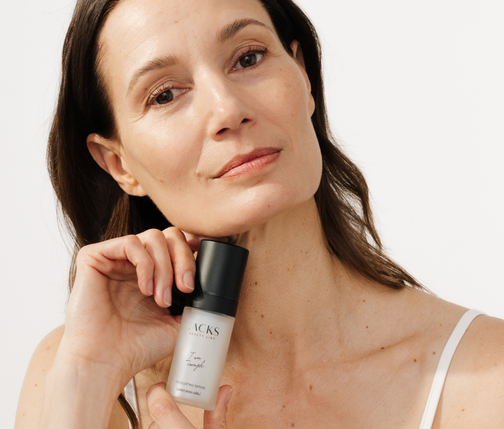
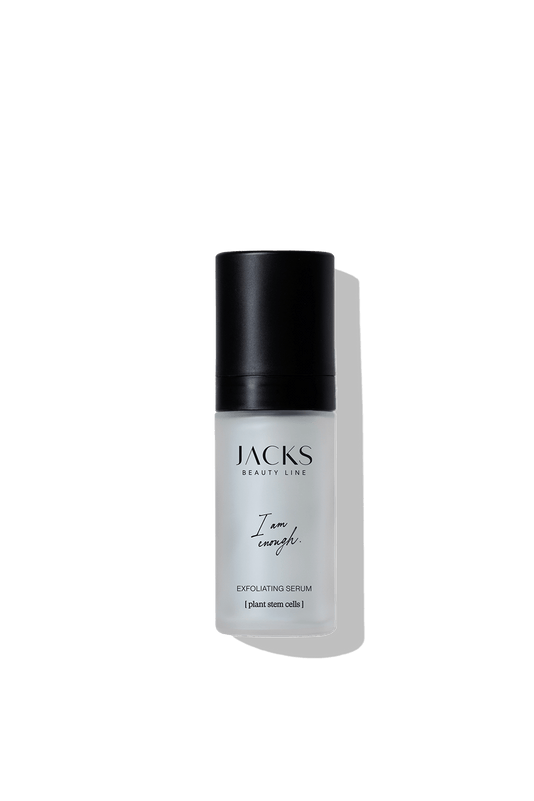
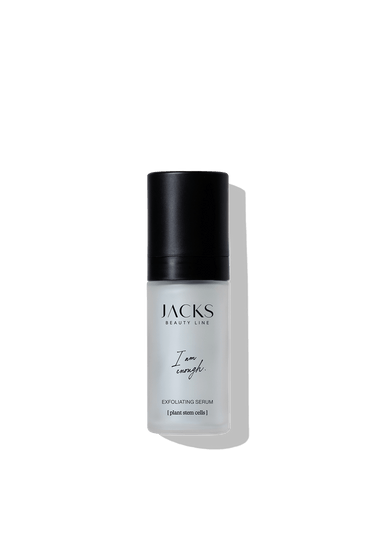
Those starting with peels for the first time should begin with low-concentration AHA or PHA products, like our Exfoliating Serum. Those with experience can also use higher concentrations or combination peels, but always allow enough time to adjust.
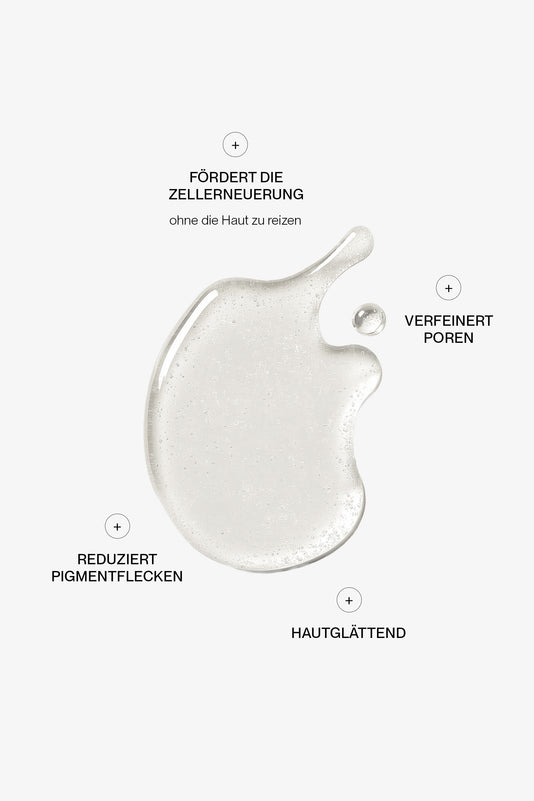
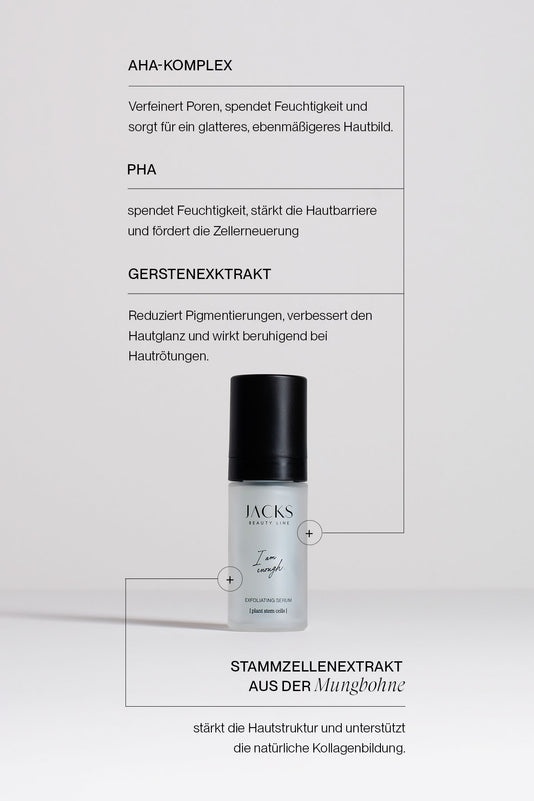
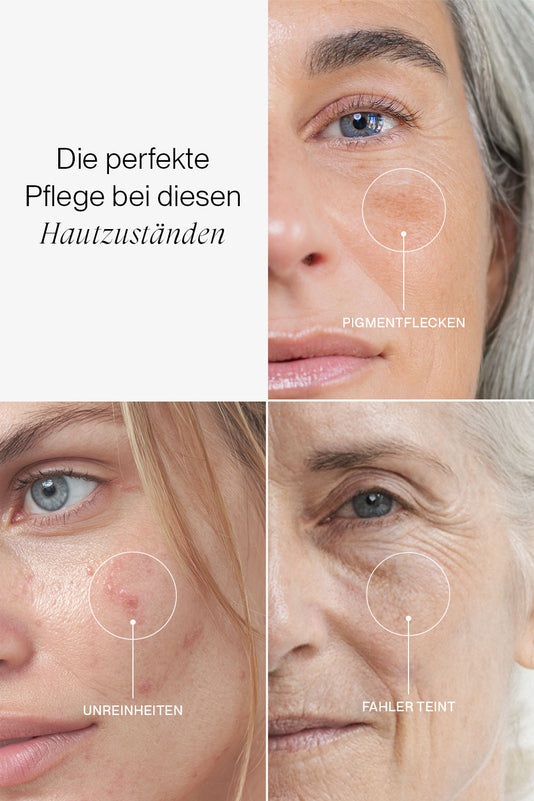


The correct application determines whether a peeling benefits or harms the skin. These steps apply to both types of peeling:
Before peeling: Thoroughly cleanse the skin and dry completely, as moisture can uncontrollably increase the absorption of active ingredients in chemical peels.
When applying: Apply chemical peels evenly and strictly adhere to the specified exposure time. Gently massage mechanical peels without pressure; circular movements with light pressure are sufficient.
After peeling: Rinse mechanical peels thoroughly and then provide the skin with a soothing moisturizer. Chemical peels like our Exfoliating Serum do not need to be washed off and can be directly integrated into the existing skincare routine. They are best applied after cleansing and toner but before moisturizer, following the principle "thin to thick."
Sun protection the next morning: After every peeling, especially chemical peels, sun protection with at least SPF 30 is necessary. The skin is more sensitive to UV radiation after exfoliation, increasing the risk of pigmentation spots.
Frequency:
Anyone trying a new peel should first test it on a small area on the neck or wrist. Strong burning, persistent redness, swelling, or rash are clear warning signs to stop using the product.
Also note that chemical peels should not be used simultaneously with retinol or high-dose vitamin C, as this can overload the skin. The situation is different with low-dose or gently formulated retinoid complexes; here, individual tolerance and formulation matter. When in doubt, it is better to avoid active ingredients on peeling days and resume them the following day.
Both peeling methods have their merits, and which one is right for you mainly depends on your skin type and your goal. Chemical peels dissolve dead skin cells without mechanical abrasion, work more evenly, and are the gentler choice for most skin types. Mechanical peels provide an immediate glow and are well suited as an occasional supplement for normal, non-inflamed skin. For beginners, we recommend starting with a mild chemical exfoliant; our Exfoliating Serum is an ideal first step. For stronger peels, hyperpigmentation, or acne scars, consulting a dermatologist is advisable.
The key points summarized:
Chemical peels dissolve dead skin cells using acids or enzymes, while mechanical peels remove them through physical abrasion. Chemical peels work more evenly and are the gentler method for most skin types.
PHA peels or enzymatic peels are the gentlest choice because their active ingredients penetrate the skin more slowly and cause less irritation. Mechanical peels with coarse particles should be avoided for sensitive skin.
Low-concentration AHA/BHA products, like our Exfoliating Serum, can be used one to three times per week, with a gradually increased frequency recommended. Stronger dosed or professional peels should only be used every two to four weeks.
Yes, but not on the same day. Combining them in the same routine can lead to over-exfoliation and irritation, so it's better to spread them out on different days of the week.
When used correctly and with fine granules, mechanical exfoliants are not harmful. However, too much pressure or coarse particles can cause micro-injuries and weaken the skin barrier.
BHA peels with salicylic acid are the first choice for acne and blemishes. They cleanse the pores from within and reduce inflammation. However, with active acne, it is better to avoid mechanical peels.
Yes, after every peeling, sun protection with at least SPF 30 is necessary the next morning. The skin is more sensitive to UV radiation after exfoliation, which increases the risk of pigmentation spots.
Basically at any adult age. From the mid-20s, natural cell renewal slows down, which is why regular exfoliation becomes increasingly beneficial. From age 40, AHA peels are especially suitable because they stimulate cell renewal and improve moisture balance.
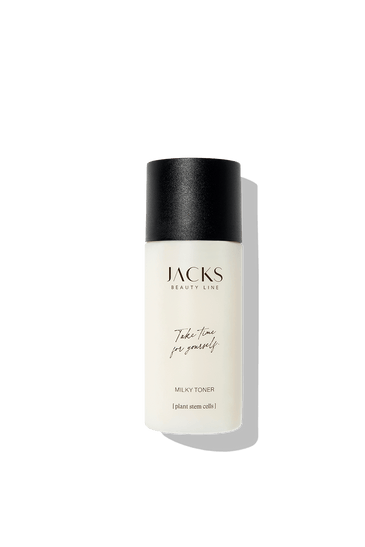
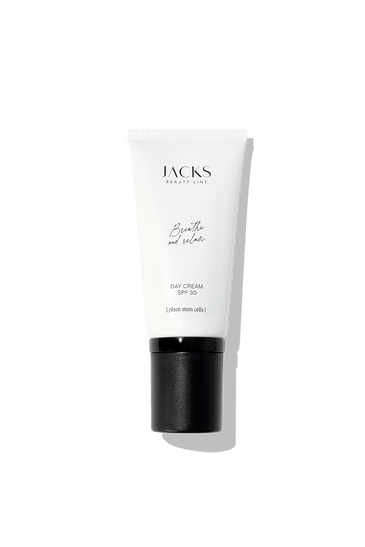
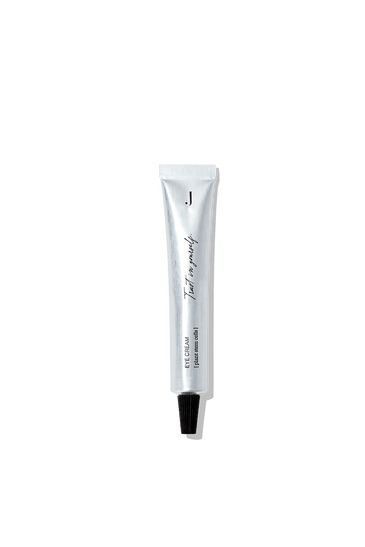
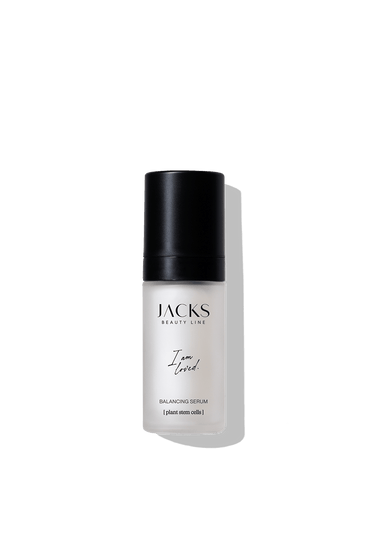
Discover our skincare

Marlene Lufen loves fine craftsmanship. Whether at home, at work, or when applying Make-up. She has now designed her own Brushes for JACKS: hand-painted in her favorite shade, chocolate brown.
Read more
Look makeup-free even though you’re wearing Make-up: Here’s how to achieve the no-makeup look step by step.
Read more
Why did the new shade expansion take two years? Rim Zemuye explains how foundation, concealer, and Cream Blush for darker skin tones came about.
Read more
Ordered the wrong shade, and now the product sits unused in your bathroom? It doesn’t have to be that way: our consultation options before and after your purchase help you...
Read more
Sun, heat, humidity: In summer, your Make-up needs lightweight textures. Find out how to keep your look fresh even at 30 degrees.
Read more
UV rays, heat, and sweat put particular stress on your skin in summer. Here’s how to build the right skincare routine.
Read more
Cream Blush is creamy with a glowy finish, Powder Blush is powdery and long-lasting. Find out which blush suits your skin type and why combining both often delivers the best...
Read more
Discover how to apply mascara correctly! With step-by-step instructions, tips on color, ingredients & removing makeup, you can achieve the perfect eye look without clumping or smudging.
Read more