





The Artist Collection by Marlene Lufen
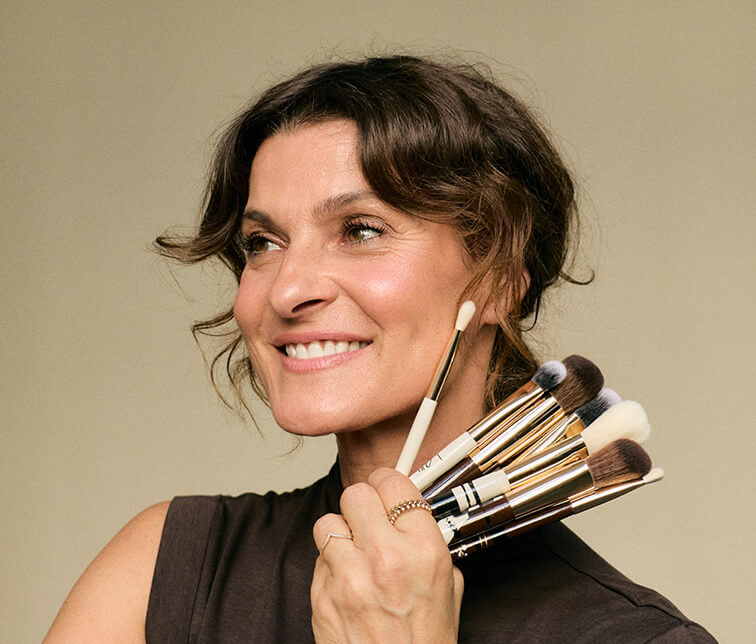
Marlene Lufen loves fine craftsmanship. Whether at home, at work, or when applying Make-up. She has now designed her own Brushes for JACKS: hand-painted in her favorite shade, chocolate brown.
Read more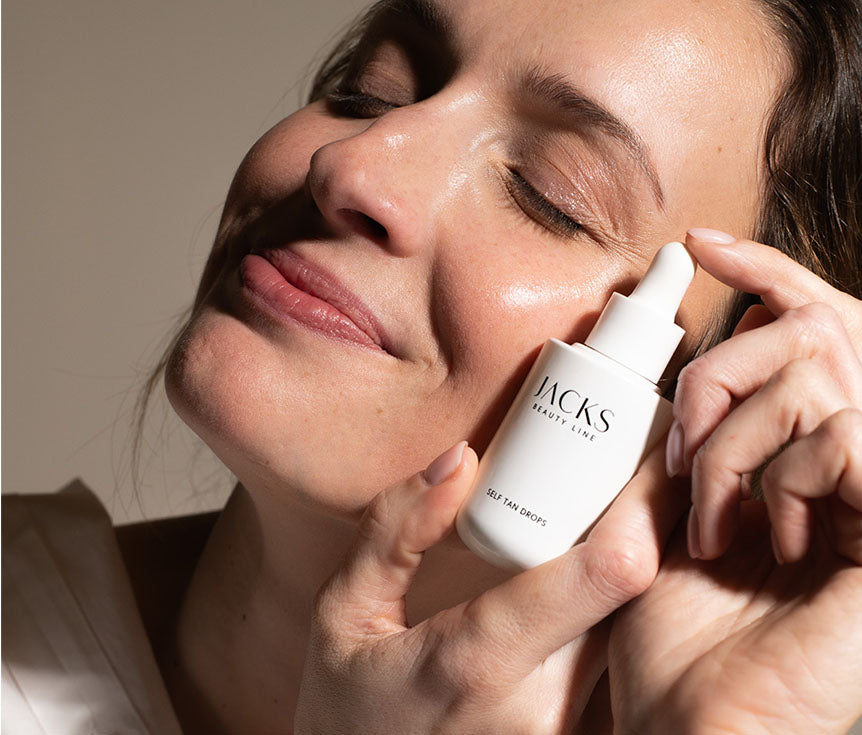
Reading time approx. 5-6 minutes
As soon as the skin tans, it reacts to UV rays and protects itself from damage such as wrinkles, pigmentation spots, or skin cancer. Those who want an even tan without unnecessarily stressing the skin therefore rely on the safe alternative of self-tanners. Applying self-tanner to the face is a simple and effective method to achieve a natural summer glow, completely without UV rays. In this article, you will learn how self-tanners work, which product is suitable for sensitive facial skin, and how to apply it step by step for a streak-free and even finish.
by Julia Döll – last updated on 3. March 2026
Every natural tan occurs as a protective reaction of the skin to UV radiation. Over time, this can lead to wrinkles, pigmentation spots, and premature skin aging. Those who want to apply self-tanner to their face therefore choose a skin-friendly alternative that works completely without sun exposure. Modern self-tanners for the face can be dosed individually and, when used correctly, provide a natural and even effect. However, it is important that they do not replace UV protection and that sunscreen remains part of the daily skincare routine.
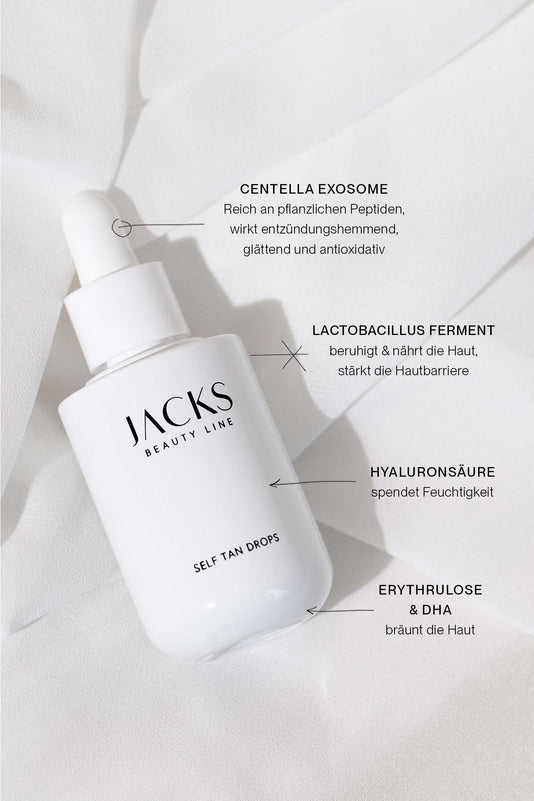
If you want to apply self-tanner to your face, the active ingredient dihydroxyacetone, or DHA for short, works only in the outermost layer of the skin. It reacts with the proteins there, creating a visible, temporary tan that develops within a few hours.
The intensity depends on the product and dosage and can usually be built up gradually with special facial formulas.
If you want to apply self-tanner to your face, you should proceed in a structured way. With the right preparation and technique, you can achieve an even, natural glow without spots.
Cleanse your face thoroughly and remove makeup with a cleanser. A gentle exfoliation the night before ensures that dead skin flakes are removed and the self-tanner does not settle on dry spots.
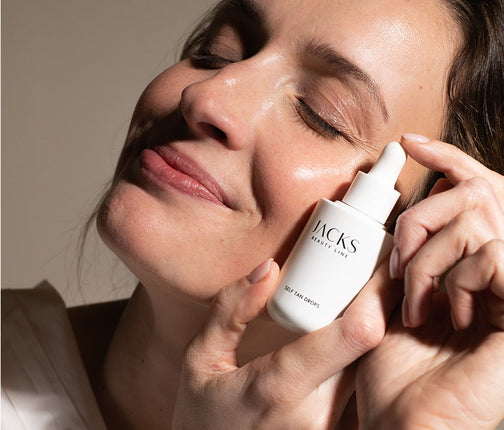
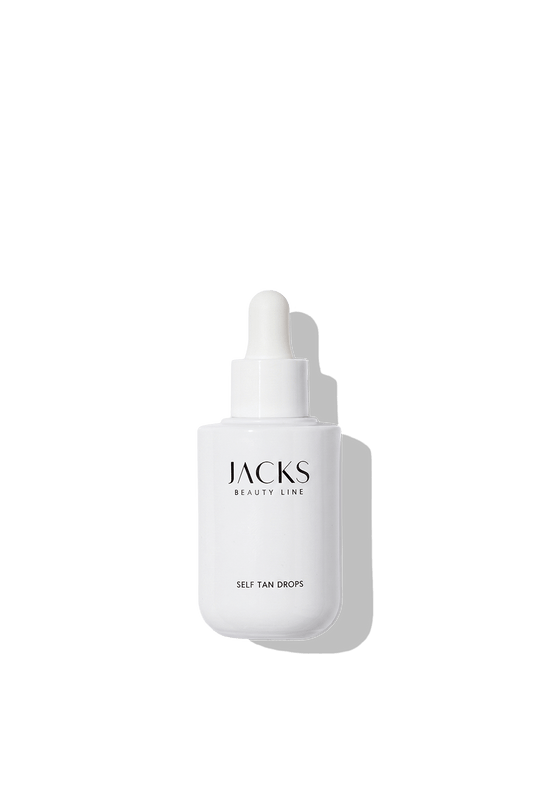
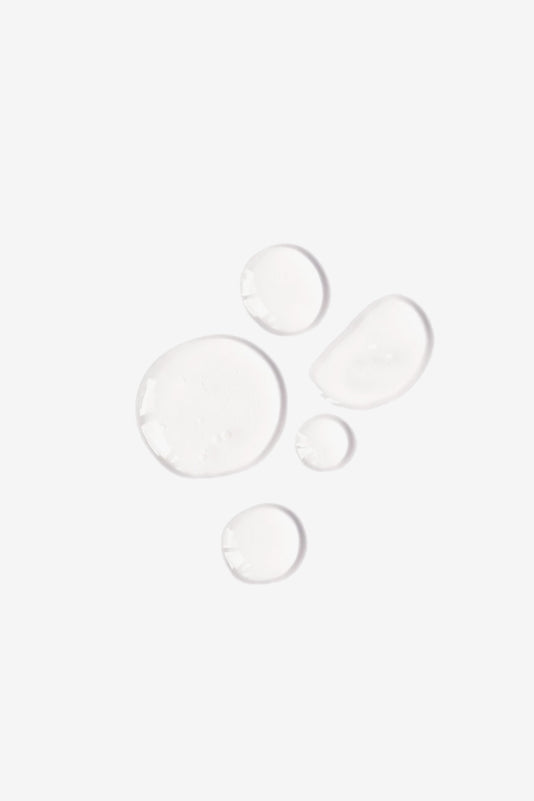
Mix 1–3 drops of the Self Tan Drops into your usual day or night care. For a more intense result, you can use the drops for several evenings in a row or apply them pure to cleansed skin.
Apply the mixture from the center of the face outward. Start at the bridge of the nose, work towards the cheeks, forehead, and chin, and blend the edges towards the hairline and décolleté. Avoid the eyebrows and hairline to achieve an even result.
Carefully blend the hairline, eyebrows, and jawline to avoid visible transitions. Try to avoid the eyebrows or gently wipe off any excess product.
Wash your hands thoroughly with soap after use to avoid discoloration.
Let the self-tanner absorb for at least ten minutes before applying other products or lying down. The tan develops gradually over several hours and intensifies with regular use. Avoid water, heavy sweating, or friction in the next few hours.
To apply self-tanner streak-free and naturally, you should avoid the typical mistakes:
Applying self-tanner to the face is the ideal solution for anyone who wants a natural tan without exposing the skin to harmful UV radiation. For a natural, sun-kissed face, proper preparation and application of self-tanner are crucial.
A structured routine with gentle exfoliation, dosing the self-tan drops in skincare products, careful application, and blending at the edges ensures a streak-free result. Wash hands thoroughly afterward and allow enough development time for the tan to develop evenly.
The most important tips at a glance:
We recommend repeating the application every two to three days. This keeps the top layer of skin evenly tanned before it naturally renews itself.
No, DHA only works in the outermost layer of the skin and is safe for external use. Contact with eyes and mucous membranes should be avoided.
Yes, DHA does not enter the bloodstream, so its use during pregnancy is safe.
DHA reacts with the top layer of the skin and can slightly darken pigmentation spots, but the overall effect is even and harmonious. Those who want to avoid the spots can protect them beforehand with petroleum jelly.
When used correctly, the Self Tan Drops do not leave any stains. Exfoliation and moisturizing provide a smooth base, work the drops into your skincare, and distribute evenly.
No, a tan does not replace sun protection. For safe UV protection, continue to use sunscreen daily.
The drops absorb quickly. To prevent discoloration, wash your hands thoroughly after application and let the skin absorb the product.
Our Self Tan Drops gently build up a tan. Even very fair skin gets a natural glow that can be intensified as desired.



Marlene Lufen loves fine craftsmanship. Whether at home, at work, or when applying Make-up. She has now designed her own Brushes for JACKS: hand-painted in her favorite shade, chocolate brown.
Read more
Look makeup-free even though you’re wearing Make-up: Here’s how to achieve the no-makeup look step by step.
Read more
Why did the new shade expansion take two years? Rim Zemuye explains how foundation, concealer, and Cream Blush for darker skin tones came about.
Read more
Ordered the wrong shade, and now the product sits unused in your bathroom? It doesn’t have to be that way: our consultation options before and after your purchase help you...
Read more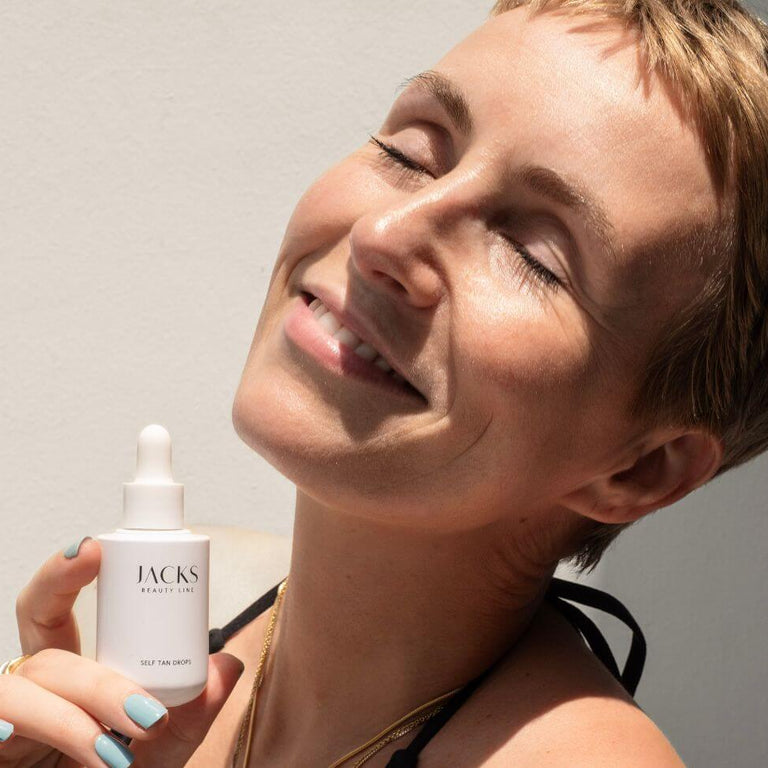
Sun, heat, humidity: In summer, your Make-up needs lightweight textures. Find out how to keep your look fresh even at 30 degrees.
Read more
UV rays, heat, and sweat put particular stress on your skin in summer. Here’s how to build the right skincare routine.
Read more
Cream Blush is creamy with a glowy finish, Powder Blush is powdery and long-lasting. Find out which blush suits your skin type and why combining both often delivers the best...
Read more
Discover how to apply mascara correctly! With step-by-step instructions, tips on color, ingredients & removing makeup, you can achieve the perfect eye look without clumping or smudging.
Read more